Follow Us:

Products
Ship Mobile Airbags
  • Ship Mobile AirbagsShip Mobile Airbags
  • Ship Mobile AirbagsShip Mobile Airbags
  • Ship Mobile AirbagsShip Mobile Airbags
  • Ship Mobile AirbagsShip Mobile Airbags
  • Ship Mobile AirbagsShip Mobile Airbags

Ship Mobile Airbags

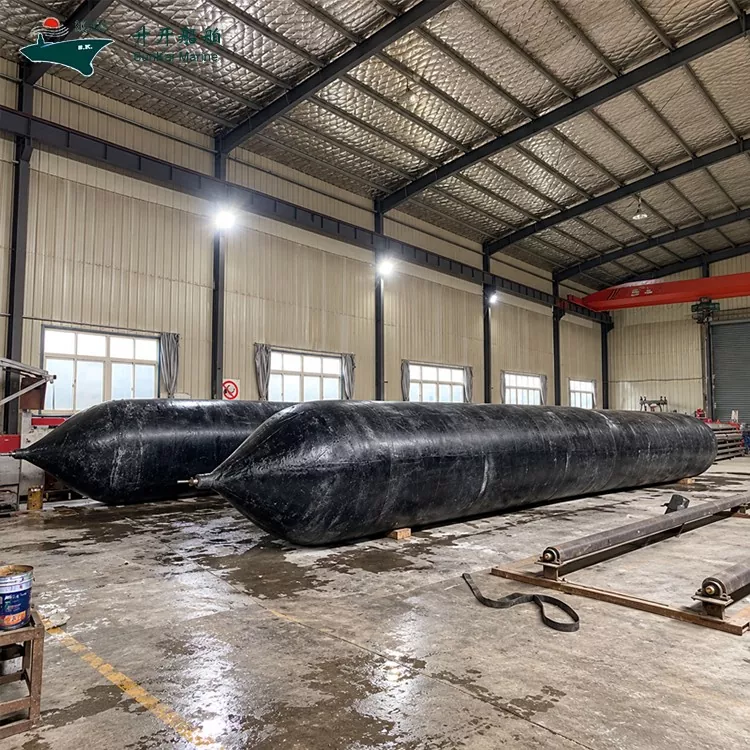
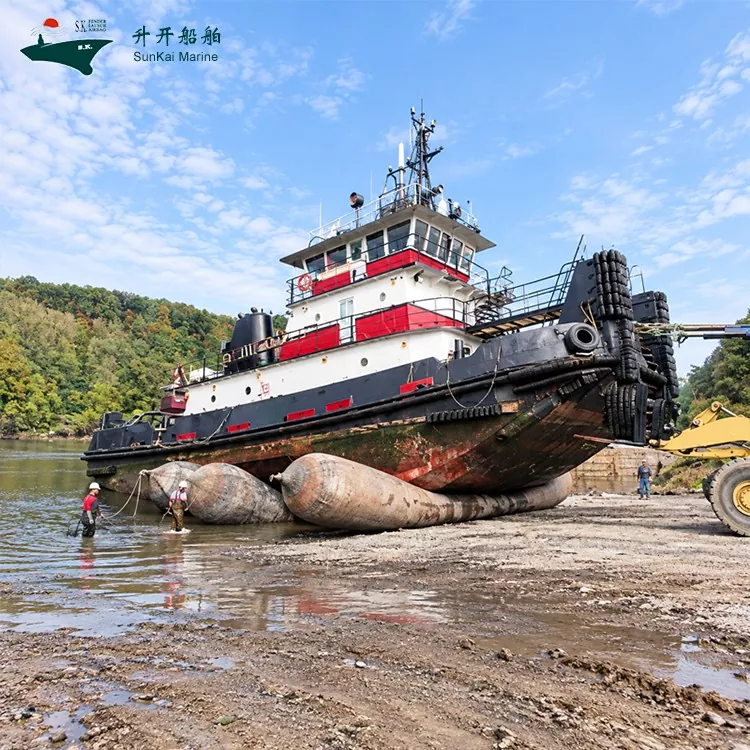
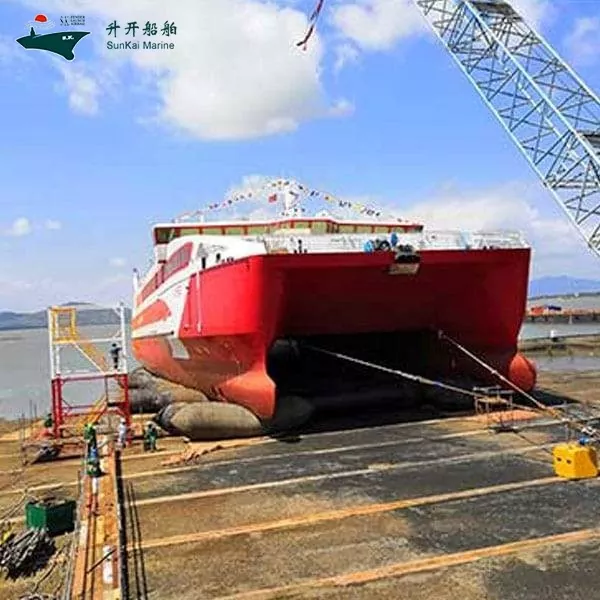
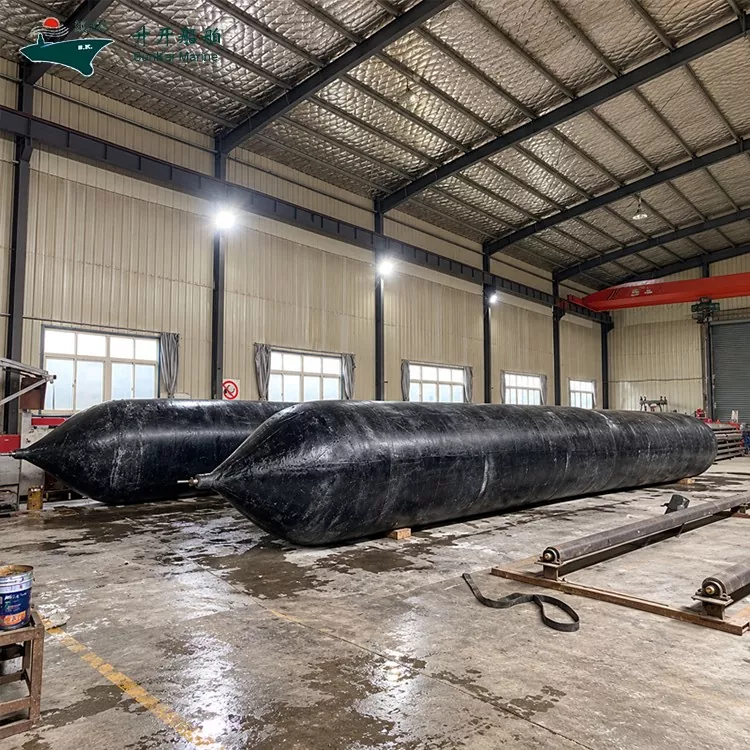
Qingdao Shengkai Marine Supplies Co., Ltd. customizes mobile safety airbags for ships. These airbags feature low-pressure inflation and a large load-bearing capacity, with a traction force of only 2%-5% of the ship's weight. They allow for flexible ship movement without the need for fixed tracks. Bulk purchases are welcome.
Rating: 5.0
(Rating Count: 1)

Qingdao Shengkai Marine Supplies Co., Ltd. offers popular mobile safety airbags for ships. These airbags are foldable, reusable, and allow for flexible and efficient ship relocation. They are suitable for shipyards and maintenance bases. Inquiries and orders are welcome.

What are shipboard airbags?

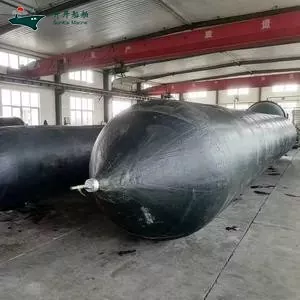
The Ship Moving Marine Airbag is a cylindrical, inflatable, flexible container with a high-strength synthetic fiber cord as its skeleton and inner and outer rubber layers. Manufactured by Qingdao Shengkai Marine Supplies Co., Ltd., this product is formed using a one-piece vulcanization process. It features conical end caps with metal nozzles and safety valves. During operation, compressed air is injected to form a rigid cylinder, absorbing energy or generating buoyancy through air compression and deformation.

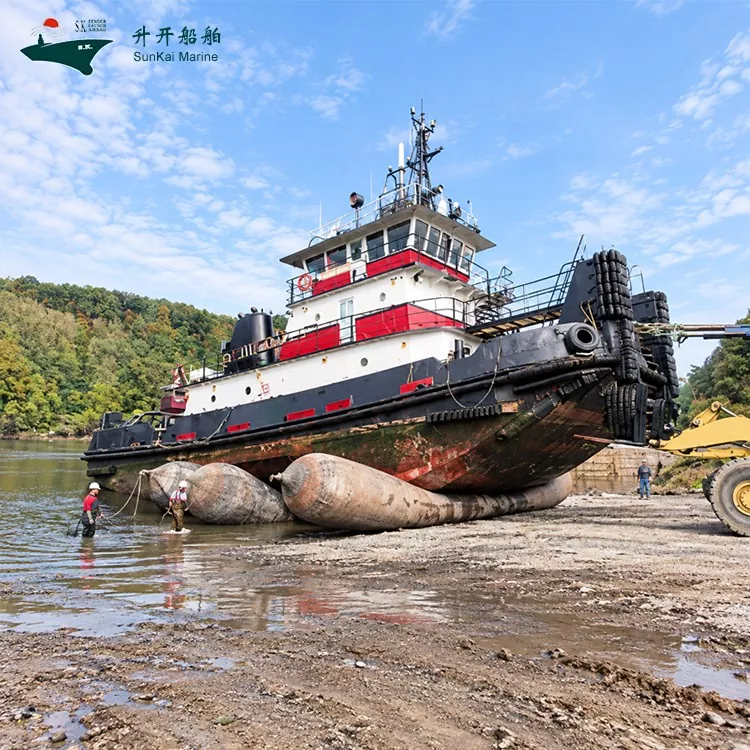
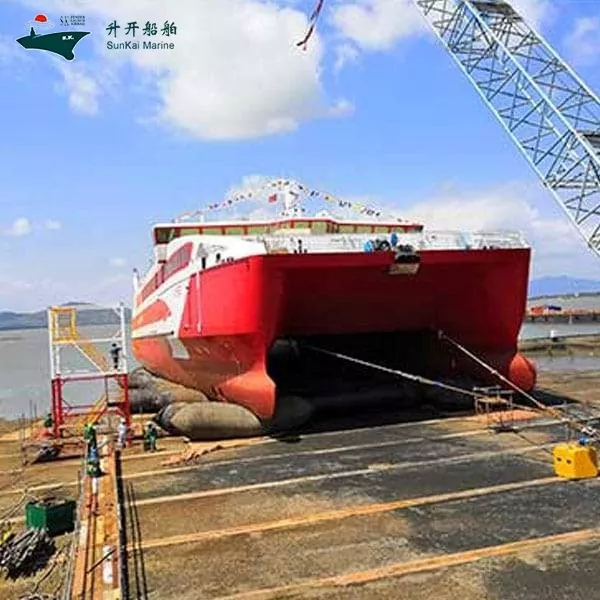
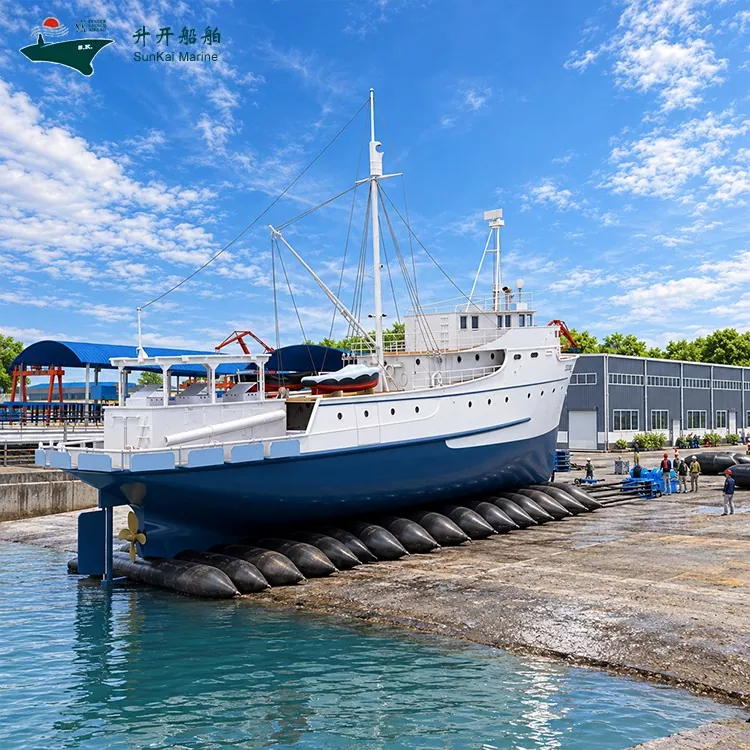
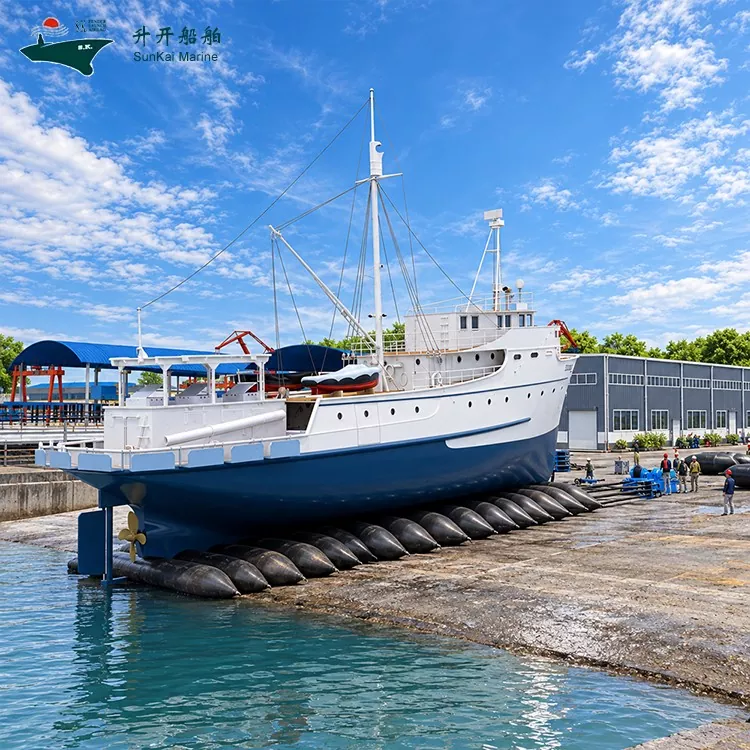
This product is widely used in ship launching, ship movement, shipwreck salvage, underwater engineering lifting, and heavy cargo handling. Compared with traditional methods such as slipway launching, floating docks, and floating cranes, it has significant advantages such as lower investment, flexible construction, no terrain restrictions, and reusability. It is a shipbuilding engineering technology pioneered in China and widely recognized internationally.

Qingdao Shengkai Marine Supplies Co., Ltd. manufactures its marine mobile safety airbags in strict accordance with ISO 14409:2011 and CB/T 3795 standards. The products range in diameter from 1.0m to 2.5m, effective length from 10m to 24m, number of layers from 4 to 10, and working pressure from 0.07 to 0.18MPa. Special specifications can be customized according to customer needs.

Product Advantages

(1) Strong load-bearing capacity: Multi-layer high-strength synthetic cord reinforcement, a single airbag can bear hundreds of tons of weight, and the maximum load of a 2.5m diameter airbag exceeds 500 tons.

(2) Low rolling friction coefficient: Based on the principle of cylindrical rolling, the friction coefficient is less than 0.05, and the traction force for moving the ship is only 2%-5% of the ship's weight, which greatly reduces energy consumption.

(3) Flexible and unrestricted construction: No need to build a fixed slide or dock, it can be used on any bank slope, flat land, or shallow water area, adapting to various terrain conditions.

(4) Low investment cost: Compared with traditional slipway launching and floating dock, airbag launching can save more than 80% of infrastructure investment, which is especially suitable for small and medium-sized shipyards.

(5) Reusable: Made of high-quality natural rubber and synthetic cord, with a normal service life of 6-10 years, it can be repeatedly inflated and deflated, and folded for storage.

(6) Safe and reliable: Equipped with a safety valve and metal air nozzle, it undergoes a water pressure test at 1.5 times the working pressure and a 24-hour air tightness test before leaving the factory, and meets the ISO 14409 standard.

Ship Mobile Airbags 

Specifications

Qingdao Shengkai Marine Supplies Co., Ltd. offers 22 standard specifications of mobile marine airbags, covering diameters of 1.0m-2.5m, effective lengths of 10m-24m, 4-10 layers, and working pressures of 0.07-0.18MPa, to meet the needs of various vessels and projects. Specific specifications are shown in the table below:

Diameter (m)

Effective length (m)

number of floors

Work pressure (MPa)

1.0

10

5~6

0.07~0.10

1.0

12

5~6

0.07~0.10

1.0

15

5~6

0.07~0.10

1.2

10

5~6

0.08~0.12

1.2

12

5~6

0.08~0.12

1.2

15

5~6

0.08~0.12

1.5

12

5~8

0.08~0.16

1.5

15

5~8

0.08~0.16

1.5

18

5~8

0.08~0.16

1.5

20

4~8

0.08~0.16

1.5

24

5~8

0.08~0.16

1.8

12

5~8

0.08~0.15

1.8

15

5~8

0.08~0.15

1.8

18

5~8

0.08~0.15

1.8

20

5~8

0.08~0.15

1.8

24

5~8

0.08~0.15

2.0

18

6~10

0.08~0.18

2.0

20

6~10

0.08~0.18

2.0

twenty four

6~10

0.08~0.18

2.5

18

7~10

0.07~0.13

2.5

20

7~10

0.07~0.13

2.5

twenty four

7~10

0.07~0.13

Selection Recommendations

Choosing the right model is crucial for ensuring the safe and efficient use of airbags. The following are key selection points:

• The required number and diameter of airbags are determined based on the ship's weight and hull shape: the heavier the ship, the larger the diameter and the more airbags are needed. Generally, each airbag should not bear more than 70% of its rated load.

• Select the number of layers according to the type of operation: 6-8 layers for conventional ship launching/moving; 8-10 layers for reinforced type for salvage/underwater lifting to improve puncture resistance and explosion resistance.

• Select the working pressure according to the working environment: 0.07-0.12MPa is used for conventional underwater operations; 0.15-0.18MPa high-pressure type is used for heavy ships or deep-water salvage.

• The length of the airbag should be greater than the width of the ship, ensuring that both ends of the airbag extend at least 0.5m beyond the ship's side to prevent the airbag from slipping off during rolling.

• During salvage operations, the total buoyancy should be 1.2-1.5 times the underwater weight of the sunken ship to ensure a safety margin, and the airbag positions should be reasonably arranged according to the structure of the sunken ship.

• Our company can provide professional airbag selection calculation and configuration solutions based on the ship parameters (length, width, depth, displacement, and hull shape) and operating conditions provided by the customer.

Ship Mobile Airbags 

Quality Inspection Process

Qingdao Shengkai Marine Supplies Co., Ltd. has established a comprehensive quality management system and has passed ISO 9001:2015 certification. Every airbag undergoes rigorous inspection before leaving the factory.

(1) Visual inspection: Check whether there are defects such as bubbles, cracks, impurities, delamination, etc. on the surface of the airbag, whether the end caps are formed regularly, and whether the metal parts are installed firmly.

(2) Dimensional measurement: Measure the diameter and effective length of the airbag under the rated working pressure. The dimensional tolerance is controlled within ±3%, which meets the requirements of ISO 14409 standard.

(3) Air tightness test: Inflate the airbag to the rated working pressure and maintain the pressure for 24 hours. The pressure drop should not exceed 5% to ensure that there is no air leakage during long-term use.

(4) Water pressure burst test: Samples are randomly selected from each batch for water pressure test. The samples are filled with water and pressurized until bursting. The bursting pressure is not less than 3 times the rated working pressure.

(5) Compression load test: Pressurize the airbag to 70% of its compression capacity to test its load-bearing capacity and deformation recovery performance, and ensure safe operation under rated load.

(6) Type test: When a new product or material is changed, a full type test shall be conducted, including air tightness, compression, load bearing, bursting, compression recovery, etc. Only after passing the test can it be mass-produced.

Installation and Maintenance Guide

Proper installation and maintenance are crucial for ensuring the long-term safe and reliable operation of airbags. The following are detailed installation procedures and daily maintenance guidelines:

Installation and Operation Guide

Step 1: Pre-installation inspection. Inspect the airbag for any defects, verify the parts list (slings, shackles, pressure gauge, inflation hose, etc.), prepare the air compressor, and remove any sharp objects from the work area.

Step 2: Inflation Operation. Lay the airbag flat, connect the inflation hose, and slowly inflate to 50% of the rated pressure. Pause to check for leaks, and continue inflating to the rated working pressure after confirming there are no leaks. Close the valve and let it stand for 30 minutes to confirm that the pressure is stable.

Step 3: Deployment and Positioning. Launching the Ship: Airbags are positioned perpendicular to the ship's axis at equal intervals, with each end extending at least 0.5m beyond the ship's side. Salvage Operation: Divers secure the airbags underwater to the load-bearing points and inflate them synchronously in stages.

Step 4: Operation Monitoring. Assign a dedicated person to observe the airbag pressure and status, control the movement/ascent speed, and immediately stop the operation if any abnormality is detected.

Step 5: Recycling and Storage. After the operation is completed, slowly release the air, rinse with fresh water, dry, fold and store in a cool, dry place.

Daily Maintenance Guide

(1) After each use: Rinse with fresh water to remove salt and mud, dry and check for damage. Repair any minor cuts promptly.

(2) Monthly inspection: Check the inflation pressure (maintain 50% of the rated pressure), check for aging cracks on the appearance, and check for rust and leakage in metal parts.

(3) Quarterly maintenance: anti-corrosion treatment of metal parts, inspection of sling wear, and replacement of damaged parts.

(4) Annual inspection: comprehensive appearance inspection, dimensional measurement, 24-hour airtightness test, and establishment of maintenance records.

(5) Long-term storage: Fill to 50% of the rated pressure, lay flat in a cool, dry and ventilated warehouse, away from heat sources and oil stains, and check once every 3 months.

(6) Common fault handling: Minor cuts can be repaired on-site with rubber repair agent; deep cuts or penetrating damage should be returned to the factory for professional repair; slow leakage should be replaced with the valve core; rapid leakage should be stopped immediately and returned to the factory for inspection.

Ship Mobile Airbags 

Certification and Standards

Qingdao Shengkai Marine Supplies Co., Ltd.'s marine airbag products strictly adhere to international standards and industry specifications, and can provide a variety of authoritative certifications:

• ISO 14409:2011: International standard for airbags used in launching and launching of ships, covering requirements for materials, design, manufacturing and inspection.

• ISO 9001:2015: Quality Management System Certification, ensuring quality control throughout the entire process from raw materials to finished products.

• CB/T 3795: Chinese shipbuilding industry standard, technical conditions for airbags used for launching and discharging ships.

• CCS (China Classification Society): A widely recognized classification society product inspection certificate in China.

• BV (Bureau Veritas): Internationally recognized and applicable to the European, Middle Eastern, and African markets.

• ABS (American Bureau of Shipping): Applicable to the Americas market, meeting the relevant requirements of the U.S. Coast Guard.

• DNV (Det Norske Veritas): The authoritative certification in the offshore engineering field, applicable to marine engineering projects.

• LR (Lloyd's Register): The oldest classification society, widely recognized in Commonwealth countries.

Each airbag undergoes a 24-hour airtightness test, a 1.5 times working pressure hydrostatic test, and a visual dimensional inspection before leaving the factory, and is issued a product certificate and inspection report. Third-party inspections or on-site inspections by classification societies can be arranged according to customer needs.

Frequently Asked Questions (FAQ)

Q1: What is the lifespan of marine airbags?

A: Under normal use and maintenance conditions, marine airbags have a service life of 6-10 years. Actual lifespan depends on usage frequency, operating environment, and maintenance conditions. Regular inspections and proper maintenance can effectively extend their service life.

Q2: How to choose the right airbag size?

A: The required buoyancy depends on the vessel's weight, hull shape, and type of operation. General principle: the heavier the vessel, the larger the diameter and the more airbags needed; the total buoyancy for salvage operations should be 1.2-1.5 times the underwater weight of the sunken vessel. Our company can provide professional selection and calculation services.

Q3: Can an airbag be repaired if it leaks air?

A: Minor cuts (depth not exceeding the thickness of the outer rubber layer) can be repaired on-site with a special rubber repair agent; deep cuts or penetrating damage require professional repair at the factory, and air tightness and water pressure tests must be performed again after repair.

Q4: Can airbags be used in low-temperature environments?

A: Yes. Our airbags use a low-temperature resistant rubber formula and can be used in environments ranging from -30℃ to +60℃. The inflation pressure should be adjusted appropriately in low-temperature environments to avoid abnormal pressure due to temperature changes.

Q5: How much weight can an airbag support?

A: The load-bearing capacity depends on the diameter, working pressure, and number of layers. Taking a 1.5m diameter, 0.15MPa, 8-layer airbag as an example, the load-bearing capacity per unit length is approximately 15 tons/m, and a 15m long airbag can bear a total load of approximately 225 tons. A single 2.5m diameter high-pressure airbag can bear a load exceeding 500 tons.

Q6: What is the delivery time? Can it be customized?

A: Standard specifications are in ample stock and will be shipped within 5-10 business days; custom specifications will be shipped within 15-25 business days. Customization of parameters such as diameter, length, number of layers, and working pressure is supported, and colors and markings can also be customized according to customer needs.

Ship Mobile Airbags 

Send Inquiry
Contact Info
Send your inquiry to SunKai now! Get a quick quote for our quality Marine Airbag, Marine Fender, Marine Buoys. Our China team offers professional support.
Rating:
5.0
X
We use cookies to offer you a better browsing experience, analyze site traffic and personalize content. By using this site, you agree to our use of cookies. Privacy Policy
RejectAccept