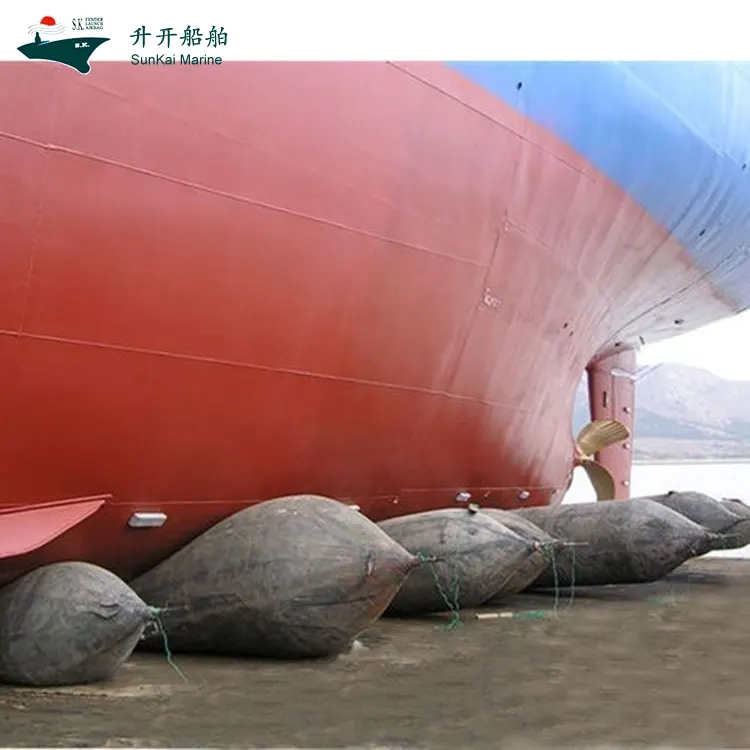
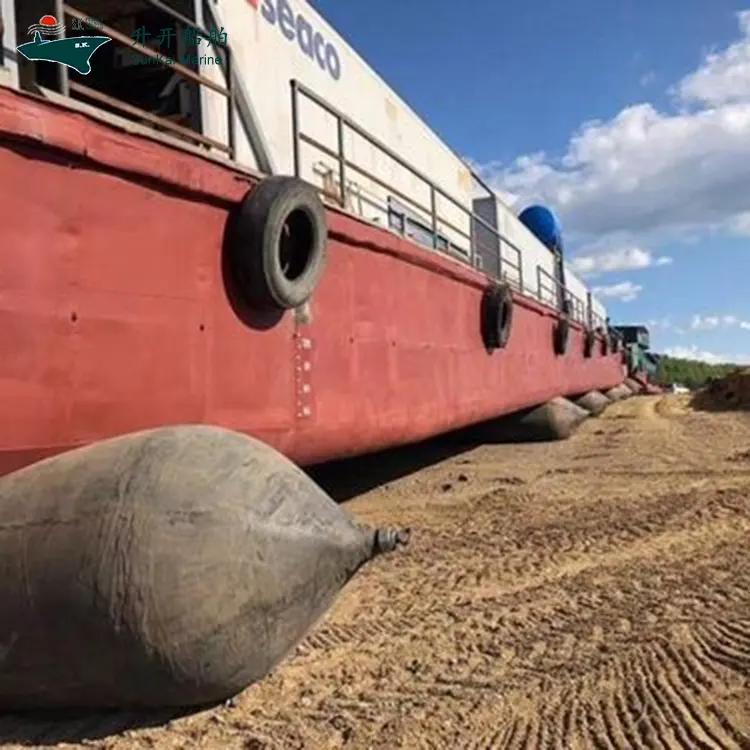
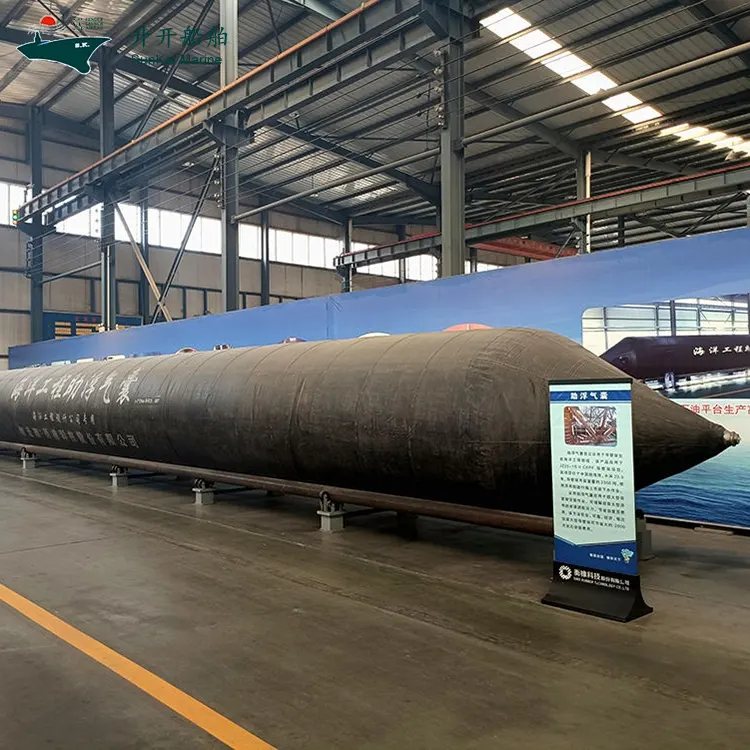
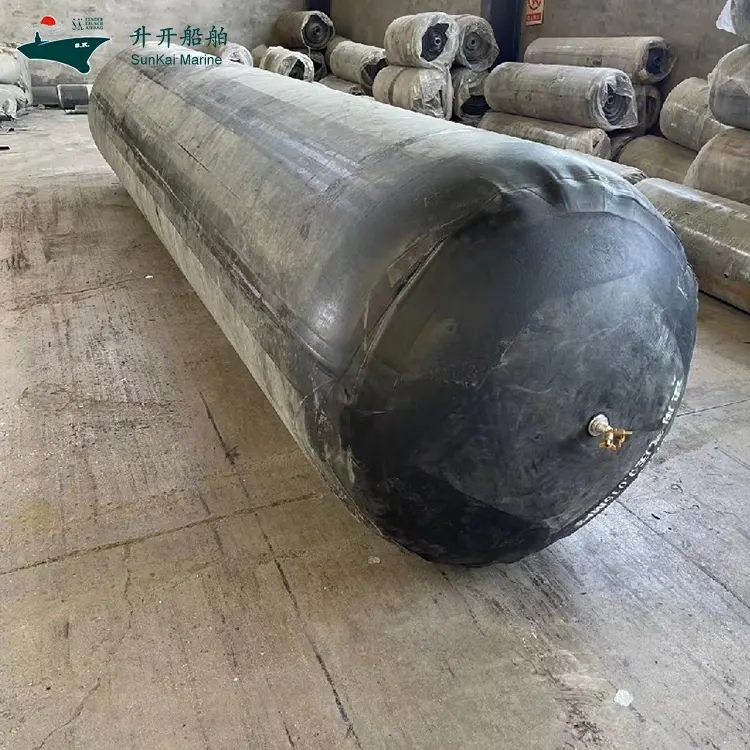
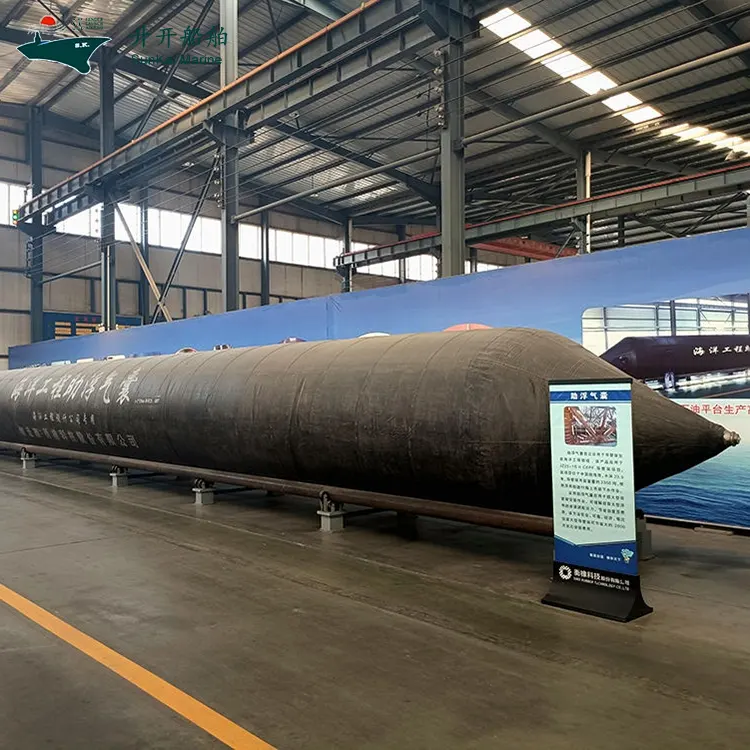
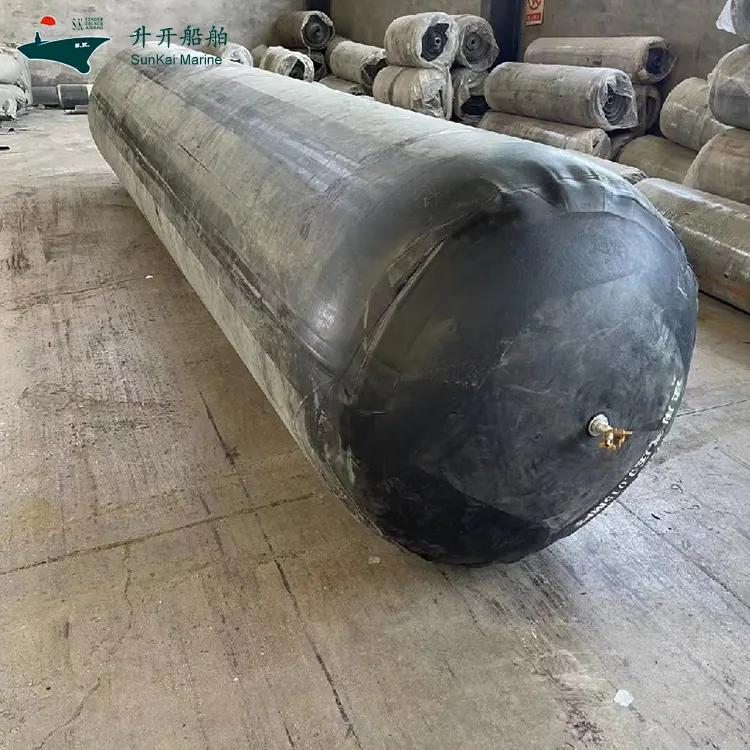
Qingdao SunKai Marine Supplies Co., Ltd. custom-builds Boat Launching Inflatable Airbags with compact diameter and high-response design, fast inflation/deflation and simple operation, deployable and recoverable by a single person. Featuring lightweight rubber compound and high-strength nylon cord reinforcement, weighing only 70% of standard airbags of the same specification, ensuring safe launching and recovery of lifeboats and small vessels. CCS certified, equipped with quick connectors and pressure gauges. Welcome shipyards and rescue units to place bulk orders, with special specifications customization available.
Qingdao SunKai Marine Supplies Co., Ltd. produces Boat Launching Inflatable Airbag, a specialized lightweight airbag series with smaller diameter (0.6-1.0m) and rapid inflation response, purpose-built for lifeboat and small vessel launching as well as emergency rescue deployment. Manufactured to ISO 14409:2011 standards with high-strength tire cord reinforcement, these airbags offer easy handling and fast deployment by small crews. Welcome shipyards, coast guard stations and rescue units to place bulk orders.
Working Principle
The working principle of marine airbags is based on two core mechanisms: cylinder rolling dynamics and gas elastic support.
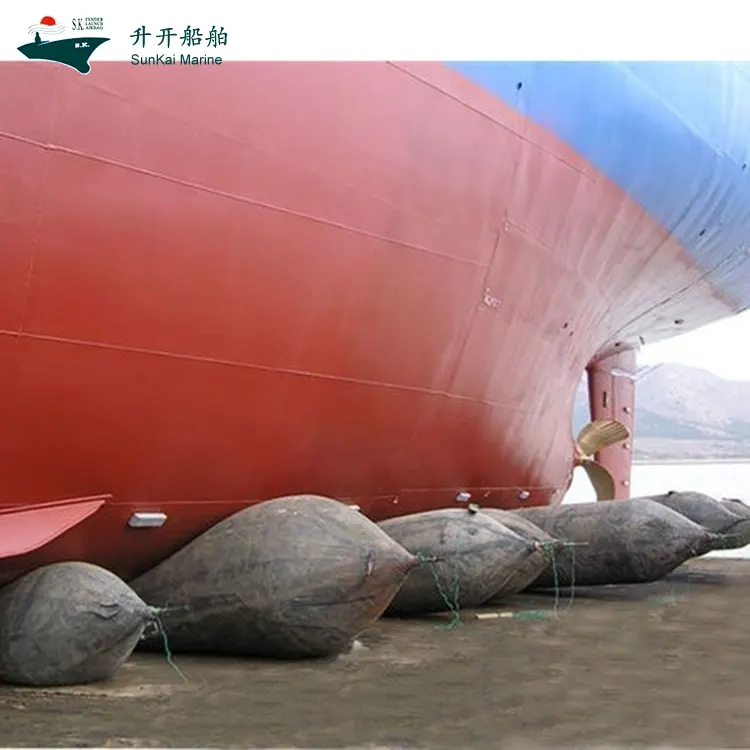
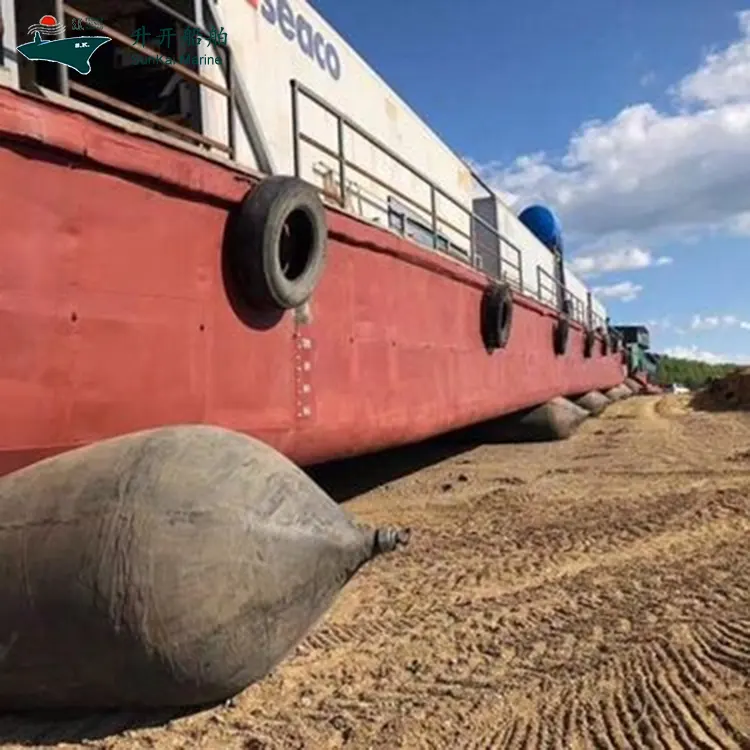
1. Inflation Support Phase: Place deflated airbags under the vessel keel, perpendicular to the hull axis. Inflate with compressed air through the valves; the airbags gradually expand into approximate cylinders, lifting the hull off the support blocks. The compressed air inside uniformly distributes pressure, spreading vessel weight evenly across multiple airbags.
2. Rolling Movement Phase: When the hull is fully supported by airbags, remove the blocks and apply horizontal traction via winches. Under vessel weight, the airbags elastically deform - the front end in contact with the ground flattens, while the rear end recovers to circular shape. This continuous deformation-recovery cycle makes the airbags roll like rollers between the hull and ground, achieving smooth movement of heavy vessels with extremely low friction coefficient (typically <0.05).
3. Key Control Parameters: Inflation pressure determines load capacity and stiffness; diameter and length determine total load-bearing area; cord layers determine burst pressure and safety factor. By precisely controlling these parameters, safe launching and haul-out of vessels from hundreds to tens of thousands of tons can be achieved.
Key Advantages
Lightweight Construction: Featuring lightweight rubber compound and high-strength nylon cord reinforcement, product weight is only 70% of standard airbags of the same specification, easy to carry and transport.
Fast Inflation & Deflation: Compact diameter with high-response design and large-bore inflation valve, reducing inflation time by 40% compared to conventional airbags, ready for rapid deployment in emergency scenarios.
Single-Person Operation: Small volume and light weight, no winches or large auxiliary equipment needed, one person can complete the full process of airbag placement, inflation and recovery.
Safe & Controllable Operation: Equipped with quick connectors and high-precision pressure gauges, inflation pressure visible in real time, simple and clear operating steps, reducing risk of misoperation.
CCS Type Approval: Passed China Classification Society (CCS) type approval tests, meeting regulatory and specification requirements for lifeboat and rescue boat launching equipment.
Emergency Rescue Adaptability: Widely used by coast guard, maritime rescue bureaus, yacht clubs, water emergency rescue teams and flood control emergency rescue scenarios.
Specifications
Main specifications of this product series. Other sizes can be customized upon request.
Model
Diameter(m)
Init.Press(kPa)
Rated Press(kPa)
Capacity(kN/m)
Min.Burst(kPa)
YB-3
0.8
25
130
114
390
YB-4
1.0
18
100
110
300
YB-5
1.2
15
85
112
260
YB-6
1.5
13
70
115
210
YB-7
1.8
16
90
178
270
YB-8
2.0
14
80
185
240
YB-9
2.5
10
60
200
180
Applications
Vessel Launching: New vessels launched from slipways, proven for vessels up to 75,000 DWT.
Vessel Haul-out & Repair: Ships pulled ashore for maintenance without expensive dry dock infrastructure.
Dry Dock Operations: Assisting vessel entry and exit from dry docks, reducing reliance on traditional dock gates.
Marine Salvage & Rescue: Buoyancy aid for stranded or sunken vessel recovery and emergency lifting.
Heavy Structure Moving: Land transport of caissons, large concrete structures and heavy industrial components.
Temporary Berthing: Temporary berthing and mooring support in waters without fixed dock facilities.
Usage Cautions
1. Strictly control operating pressure; never exceed the rated working pressure marked on the product nameplate, as overpressure may cause airbag rupture.
2. Ground and hull surfaces in contact with airbags must be free of sharp protruding objects such as rebar ends, crushed stone or burrs, to prevent puncturing the rubber skin.
3. Avoid twisting along the airbag length direction, as twisting causes uneven cord stress and reduces load capacity and service life.
4. After inflation, avoid concentrated load impacts; when lifting vessels, apply force evenly to prevent individual airbags from withstanding excessive concentrated loads.
5. Inflation should be slow and uniform; multiple airbags should be inflated alternately to ensure stable hull lifting, avoiding tilting and slipping.
6. Before use, inspect airbag appearance for scratches, bulges, delamination, and check metal valves for security; address issues promptly or replace.
7. After use in seawater or muddy environments, promptly rinse the airbag surface with clean water to remove salt and sediment, preventing corrosion and abrasion.
8. Store away from heat sources, open flames, acids, alkalis, oils and organic solvents; avoid direct sunlight and prolonged UV exposure.
Maintenance & Care
Proper maintenance and care can significantly extend airbag service life and reduce operating costs. Follow these maintenance requirements:
Routine Inspection: Before and after each use, inspect airbag appearance, focusing on scratches, punctures, bulges, delamination and cracks; check metal valves and fittings for integrity.
Post-Use Cleaning: After each use, especially in seawater or muddy environments, thoroughly rinse the surface with clean water to remove salt, sediment and oil, then dry in shade.
Talcum Powder Application: After cleaning and drying, evenly apply talcum powder to inner and outer surfaces to prevent rubber layers from sticking and maintain rubber flexibility.
Proper Storage: For long-term storage, inflate with approximately 0.02MPa low-pressure air, keep extended and flat in a dry, cool, ventilated indoor area; do not stack heavy objects or fold for storage.
Periodic Inflation Check: During storage, perform an inflation check every 3 months to confirm good airtightness and acceptable pressure drop; identify and repair slow leaks promptly.
Damage Repair: For minor surface scratches or wear, use specialized rubber repair adhesive for cold patching; for major damage or cord layer damage, return to factory for hot patching.
Service Life Assessment: Under normal use, service life is 5-8 years or 200-300 use cycles. Upon reaching service life, conduct comprehensive inspection and assessment, replacing if necessary.
Spare Parts Management: Maintain 1-2 spare airbags plus pressure gauges, inflation hoses, ball valves and repair tools to ensure operational continuity and emergency response capability.
Frequently Asked Questions (FAQ)
Q1: What are special requirements for lifeboat airbags?
A1: Lifeboat launching airbags typically require smaller diameter (0.6-1.0m), fast response, easy operation for rapid inflation/deflation, and lightweight construction for easy handling.
Q2: How long does it take to inflate an airbag?
A2: Single airbag inflation typically takes 5-15 minutes depending on size and compressor capacity. Multiple airbags can be inflated simultaneously, with overall preparation time of 30-60 minutes.
Q3: What to do if an airbag is punctured?
A3: If minor puncture causes slow leakage, reduce operation speed, move vessel to safe position, then deflate and inspect. Small damage can be repaired on-site with cold-patch adhesive; large damage requires factory hot-patch.
Q4: How to determine when replacement is needed?
A4: Consider replacement when: outer rubber shows extensive aging cracks, cord layers exposed, airtightness fails after repairs, usage exceeds 300 cycles, or service life exceeds 8 years.
Send your inquiry to SunKai now! Get a quick quote for our quality Marine Airbag, Marine Fender, Marine Buoys. Our China team offers professional support.
We use cookies to offer you a better browsing experience, analyze site traffic and personalize content. By using this site, you agree to our use of cookies. Privacy Policy