Follow Us:

News

How Marine Airbags Improve Ship Launching and Landing Efficiency

2025-11-19 0 Leave me a message

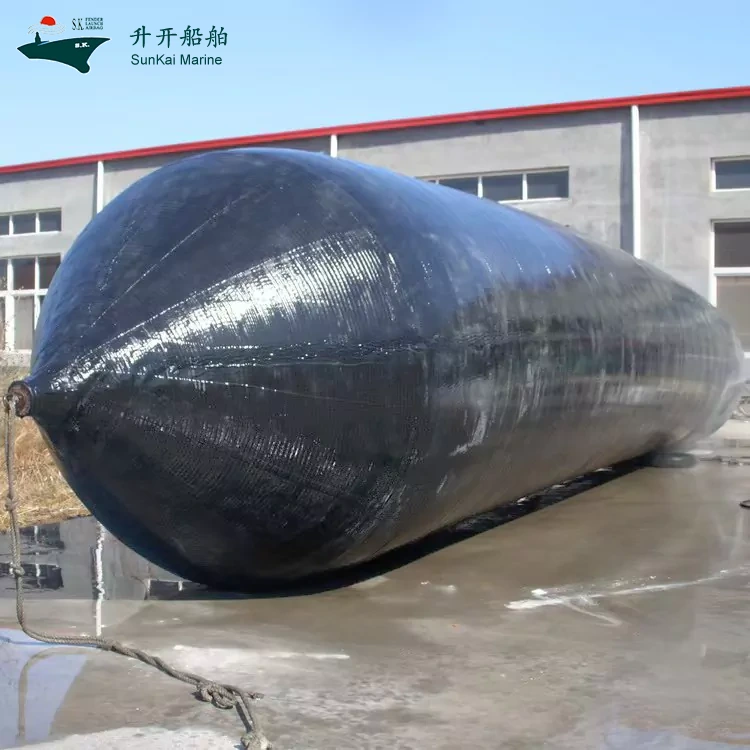
When I first joined our team at SunKai, I quickly realized how often customers struggled with complicated, time-consuming, and costly ship launching systems. Over the years, I have learned that a well-designed Marine Airbag can completely transform launching and landing efficiency. Many shipyards used to rely heavily on traditional slipways and mechanical solutions, but the flexibility, safety, and speed of marine airbags have made them one of the most trusted tools in modern marine engineering. In this article, I want to share what I have personally witnessed in the field and explain why more shipyards are switching to airbag-assisted methods.


What Makes Marine Airbags a More Efficient Choice for Ship Launching

From my 20 years of experience supporting shipyards, the core advantage is simple: airbags reduce preparation time and minimize structural workload. Instead of building fixed tracks or rails, workers can directly position the airbags under the vessel, allowing the ship to smoothly roll toward the water.

Key efficiency advantages I often highlight to clients include:

  • Shorter preparation and installation time

  • Lower labor cost due to simplified deployment

  • Reduced structural pressure on the hull

  • Flexibility for various terrains and launching angles

  • Enhanced safety with controlled rolling motion

These factors combined can improve overall launching efficiency by more than 30% in many shipyards.


How Does the Structure of a Marine Airbag Support Heavy-Duty Launching

Customers frequently ask me how something inflatable can support thousands of tons. The answer lies in the layered structure, specialized rubber formulation, and internal pressure control. Our SunKai airbags are engineered using high-strength synthetic-cord layers and heavy-duty rubber skin, giving them exceptional load-bearing performance.

Core Structural Features

  • Multi-layer reinforced cord fabric

  • High-elasticity outer rubber layer

  • Optimized diameter design for load distribution

  • Precision pressure-holding valves

  • Wear-resistant surface for long service life

This design ensures the airbag maintains stability under high dynamic loads during launching or landing.


What Technical Parameters Should Customers Pay Attention To

To help customers select the correct configuration, I always break down the essential parameters. Choosing the right size and pressure rating directly impacts performance and safety.

SunKai Marine Airbag Product Parameters

Parameter Specification Options Description
Diameter (D) 0.8m – 2.5m Larger diameters support higher vessels
Effective Length (L) 5m – 24m Depends on ship size and ground condition
Working Pressure 0.05 – 0.25 MPa Higher pressure = higher load capacity
Layer Quantity 4–12 layers More layers for heavy-duty launching
Material Natural rubber + synthetic cord High-strength, anti-wear, anti-aging
Safety Factor ≥ 4.8 Ensures stability under dynamic loads

Why Do Shipyards Prefer Airbag Launching Over Traditional Methods

This is one of the questions I answer most frequently. Many shipyards were initially skeptical until they tried airbags once. The flexibility alone saves significant cost on infrastructure.

Key reasons shipyards prefer our system

  • No need for costly slipway construction

  • Suitable for both new builds and repair operations

  • Works on various ground conditions

  • Reduces risk of hull damage

  • Faster project turnover, improving shipyard productivity

Often, customers tell me that switching to airbags gives them more freedom when handling different vessel sizes.


How Do Marine Airbags Improve Landing Efficiency During Repair Work

Landing is sometimes more challenging than launching because it requires careful control. Our airbags allow gradual rolling, ensuring safe and stable movement onto land.

Benefits I often see in repair yards:

  • Smooth and controlled hull movement

  • Less mechanical lifting required

  • Ability to land ships even in remote or temporary repair locations

  • Reduced stress on keel and hull structure

This flexibility is especially appreciated by small and medium-sized shipyards where infrastructure is limited.


What Real-World Problems Do Marine Airbags Solve for Shipyards

After working with shipyards for two decades, the problems I see repeatedly include:

  • Ground conditions that are not suitable for rails

  • Limited budget for fixed launching structures

  • High labor cost for mechanical launching

  • Time pressure due to high project volume

Marine airbags provide a cost-effective solution to all of these pain points. They are easy to transport, deploy, and reuse, making them a long-term asset for shipyard operations.


Why Should Customers Trust SunKai for Their Marine Airbag Needs

I always tell clients that an airbag is not just a piece of equipment—it is a critical safety component. Every SunKai airbag undergoes pressure testing, layer inspection, and rubber hardness evaluation before leaving the factory.

Our quality assurance includes

  • Strict pressure test before delivery

  • Reinforced surface hardness check

  • 100% inspection of cord layers

  • Compliance with ISO standard manufacturing

  • After-sales guidance for correct operation

Our engineering team also supports customers with technical launching plans to ensure safety and maximum efficiency.


How Can You Get a Customized Marine Airbag Solution for Your Shipyard

If you are planning a ship launching or landing project and want a solution that reduces cost while improving productivity, my team and I at SunKai are here to help. We can provide detailed product recommendations, custom sizes, and complete technical instructions tailored to your vessel type and working environment.

If you have any questions or want a free quotation, please contact us today. We welcome your inquiry and look forward to supporting your next project.

Related News
Leave me a message
X
We use cookies to offer you a better browsing experience, analyze site traffic and personalize content. By using this site, you agree to our use of cookies. Privacy Policy
RejectAccept