Article Summary: Ship launching is a critical stage in shipbuilding that requires reliable load support, controlled movement, and careful risk management. Ship Launching Safety Airbags provide a flexible solution for moving vessels from shipyards into the water without relying entirely on conventional fixed launching infrastructure. Manufactured with pressure-resistant rubber materials and reinforced construction, these airbags can support launching, ship repair, and vessel repositioning operations. This article explores their working principles, key advantages, technical specifications, selection criteria, and safe operating procedures to help shipyards and marine engineering professionals make informed purchasing decisions.
In modern shipbuilding, selecting dependable launching equipment is essential for protecting vessel structures and maintaining efficient production schedules. SunKai provides Ship Launching Safety Airbags designed to support demanding marine operations through pressure-resistant materials, durable construction, and flexible dimensional customization. Whether a shipyard is launching a newly built vessel, moving a ship ashore for maintenance, or repositioning a vessel within a dock, understanding the performance and application requirements of marine airbags helps ensure a more controlled and cost-effective operation.
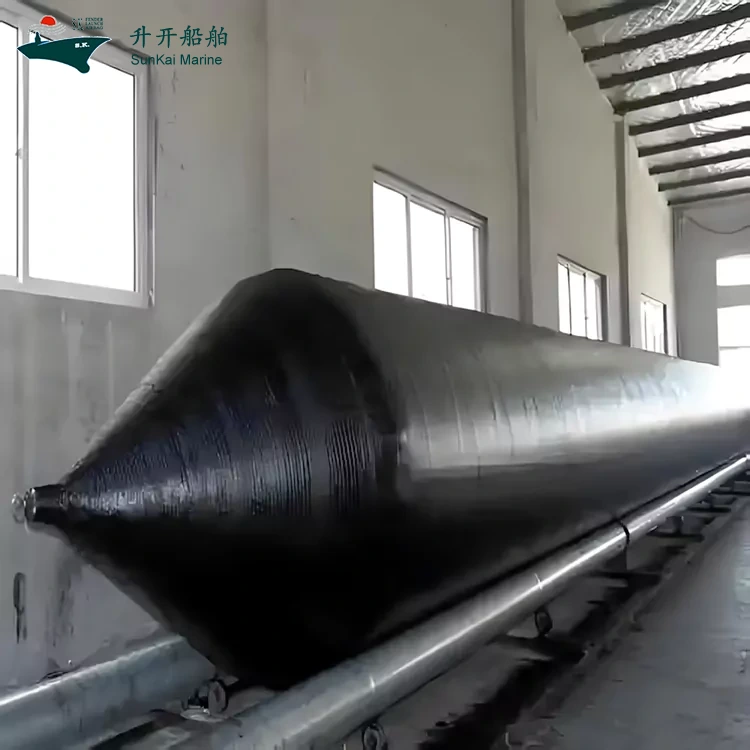
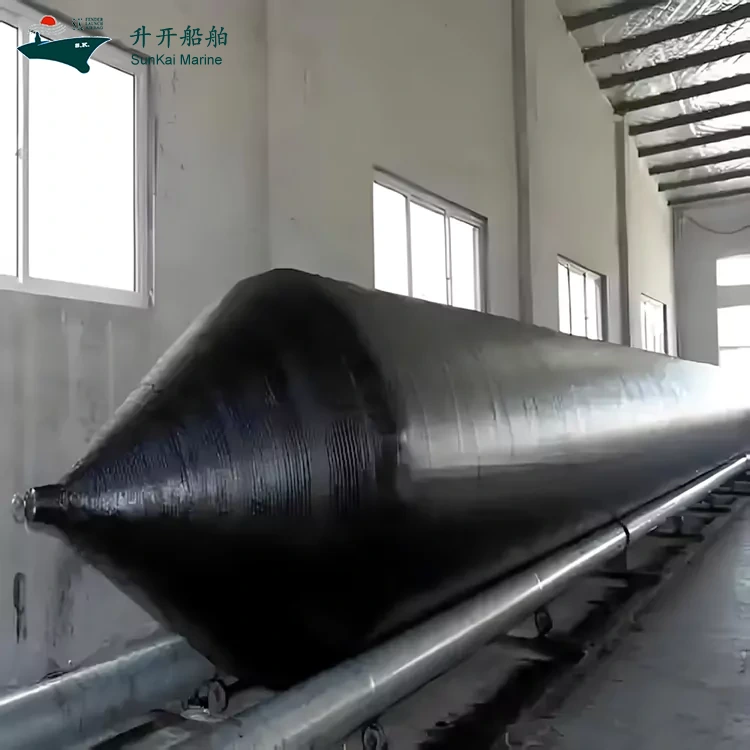
Ship Launching Safety Airbags are specialized inflatable rubber structures used to support and move vessels during launching and other marine handling operations. Unlike traditional launching systems that depend on permanent rails, large slipways, or extensive civil engineering infrastructure, marine airbags provide a flexible load-bearing solution that can be arranged beneath a vessel's hull.
These products are generally manufactured from high-strength synthetic rubber and reinforced cord-fabric layers. Their construction is designed to withstand internal air pressure, repeated loading, friction, and challenging marine working environments.
Depending on project requirements, airbags can be customized in diameter, length, working pressure, and load-bearing configuration. This flexibility makes them suitable for different vessel dimensions and shipyard layouts.
Typical product characteristics include:
The operating principle of ship launching airbags is based on pneumatic support and controlled rolling movement. Multiple inflated airbags are positioned beneath a vessel according to an engineered launching arrangement. As the vessel moves, the airbags roll along the prepared launching surface, helping distribute the load and facilitate gradual movement toward the water.
The basic operating process generally includes the following stages:
The actual arrangement depends on vessel displacement, hull geometry, slipway slope, ground bearing capacity, tidal conditions, and other project-specific factors. A properly engineered launching plan is therefore essential rather than relying on a standard airbag quantity for every vessel.
Marine airbags are designed to carry substantial loads through controlled internal pressure and reinforced rubber structures. Their load-bearing capacity depends on diameter, working height, pressure, effective contact length, and operating conditions. Correct selection helps distribute vessel weight across multiple supporting points.
Unlike fixed launching infrastructure, airbags can be repositioned and configured for different projects. Shipyards can adjust their arrangement to accommodate vessels with different dimensions and hull structures, subject to engineering verification.
Airbag launching can reduce the need for extensive permanent slipway construction and certain conventional launching facilities. For suitable projects, this can help lower site preparation costs and improve the utilization of available yard space.
Quality rubber compounds and reinforced fabric structures help improve resistance to abrasion, repeated loading, and environmental exposure. Proper storage, cleaning, pressure management, and inspection are still necessary to maintain long-term performance.
Beyond new vessel launching, these airbags can support ship repair, beaching, hauling-out, and vessel repositioning. Their versatility makes them valuable equipment for shipyards, marine contractors, and dock operators.
The flexibility of marine airbags allows them to serve several applications in the maritime industry.
Shipyards can use airbags to move newly constructed small and medium-sized vessels from construction areas toward the water. This approach can simplify launching arrangements where suitable conventional facilities are unavailable or economically impractical.
When vessels require hull inspections, coating repairs, or structural maintenance, airbags can assist with hauling the vessel ashore and positioning it in a designated repair area.
Marine airbags can also help move vessels within restricted port or shipyard spaces where large lifting equipment may be difficult to deploy.
Custom-sized airbags can be considered for projects involving unusual hull configurations or specific site limitations. Each application requires an assessment of load distribution, support geometry, and operating conditions.
Technical specifications are among the most important considerations when purchasing Ship Launching Safety Airbags. Diameter, safety working pressure, working height, and bearing capacity must be evaluated together to determine whether a product is appropriate for a particular vessel.
SunKai provides several marine airbag configurations. The following table presents selected technical data from its SK-6 Marine Airbag product specifications.
| Airbag Diameter | Safety Working Pressure | Working Height | Bearing Capacity (KN/m) | Bearing Capacity (T/m) |
|---|---|---|---|---|
| 1.0 m | 0.20 MPa | 0.6 m | 126.76 | 12.82 |
| 1.0 m | 0.20 MPa | 0.5 m | 157.76 | 16.02 |
| 1.2 m | 0.17 MPa | 0.7 m | 133.61 | 13.62 |
| 1.2 m | 0.17 MPa | 0.5 m | 187.07 | 19.07 |
| 1.5 m | 0.13 MPa | 0.9 m | 122.63 | 12.50 |
| 1.5 m | 0.13 MPa | 0.6 m | 183.94 | 18.75 |
| 1.8 m | 0.11 MPa | 1.1 m | 120.96 | 12.33 |
| 1.8 m | 0.11 MPa | 0.8 m | 172.85 | 17.62 |
| 2.0 m | 0.10 MPa | 1.2 m | 125.76 | 12.82 |
| 2.0 m | 0.10 MPa | 0.6 m | 220.04 | 22.43 |
Technical note: The figures above are selected published product specifications, not universal operating limits. Actual allowable loads and working pressures must be confirmed against the manufacturer's technical documentation and the engineered launching arrangement. The bearing capacity per unit length should not be treated as the total capacity of an individual airbag without considering its effective supporting length and actual operating conditions.
For additional product information, visit SunKai Ship Launching Safety Airbags.
Selecting the correct airbag configuration is essential for operational efficiency and safety. Buyers should evaluate the following factors before placing an order.
Purchasing decisions should be based on the complete engineering requirements rather than price or dimensions alone. Experienced manufacturers can help customers identify suitable configurations based on project information.
Even high-quality Ship Launching Safety Airbags require correct handling and professional supervision. A safe launching operation involves equipment inspection, engineering preparation, personnel coordination, and continuous monitoring.
Important operating recommendations include:
Never exceed the manufacturer's specified working pressure or use damaged airbags in a load-bearing operation. Shipyard operators should develop a project-specific emergency response plan before launching begins.
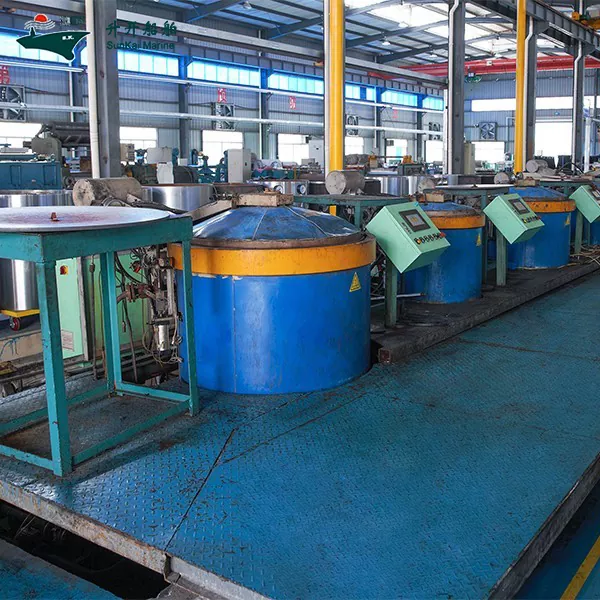
The reliability of marine airbags depends heavily on material selection, reinforcement design, manufacturing consistency, and final inspection. Buyers should look beyond appearance and evaluate the technical evidence supporting product performance.
Key manufacturing and quality considerations include:
International marine projects should also consider relevant technical standards. ISO 17682:2013 provides guidelines for ship launching utilizing airbags, covering vessel and facility specifications, launching arrangements, procedures, and safeguards. ISO 14409 is another relevant reference concerning ship launching airbags.
Compliance with an applicable standard should be verified through product documentation and project-specific assessment rather than assumed solely from a product description.
They are commonly used for suitable small and medium-sized vessels, including workboats, fishing vessels, barges, and other marine craft. The actual application depends on vessel displacement, hull design, launching conditions, and engineering calculations.
Yes. Manufacturers can provide different diameters, lengths, and technical configurations according to project requirements. SunKai offers customized solutions based on vessel tonnage, dimensions, and operating conditions.
Yes. Properly manufactured and maintained airbags can be reused across multiple operations. Their service life depends on loading conditions, operating frequency, storage practices, inspection results, and maintenance quality.
Load-bearing suitability is one of the most important considerations. Buyers should evaluate vessel weight, effective airbag contact length, diameter, working pressure, working height, and the overall launching arrangement together.
Yes. In suitable site conditions, marine airbags can help move vessels from the water onto a repair area. They provide a flexible alternative for shipyards that need to haul out vessels without depending entirely on large lifting equipment.
After use, airbags should be cleaned and inspected for cuts, abrasion, deformation, and leakage. They should be stored in a dry, suitable environment away from sharp objects, excessive heat, and damaging chemicals. Inspection and maintenance records should be maintained.
Buyers should provide vessel displacement, overall dimensions, hull configuration, required airbag quantity if already engineered, preferred diameter and length, launching site conditions, and project location. These details help manufacturers recommend suitable configurations and prepare accurate quotations.
Ship Launching Safety Airbags have become a practical solution for shipyards and marine contractors seeking flexible vessel launching, hauling-out, and repositioning equipment. Their reinforced rubber construction, adaptable dimensions, and load-bearing capabilities can help reduce dependence on permanent launching infrastructure while supporting efficient marine operations.
However, successful application depends on more than product quality alone. Proper engineering calculations, suitable equipment selection, careful installation, pressure monitoring, and professional operating procedures are all essential to achieving safe and reliable results.
SunKai is committed to providing marine airbag solutions for shipbuilding, repair, and marine handling applications. If you are looking for durable, customizable, and cost-effective Ship Launching Safety Airbags, explore our product specifications and discuss your project requirements with our team. Whether you need standard configurations or customized solutions, contact us today to receive professional product information, technical assistance, and a competitive quotation for your next marine engineering project.
Phone: +86-15853213129
Mobile: +86-15908962397
Address:No. 869, Yanqing Road, Tongji Street, Jimo District, Qingdao City, Shandong Province, China
Copyright © 2025 Qingdao SunKai Marine Supplies Co., Ltd. All Rights Reserved.