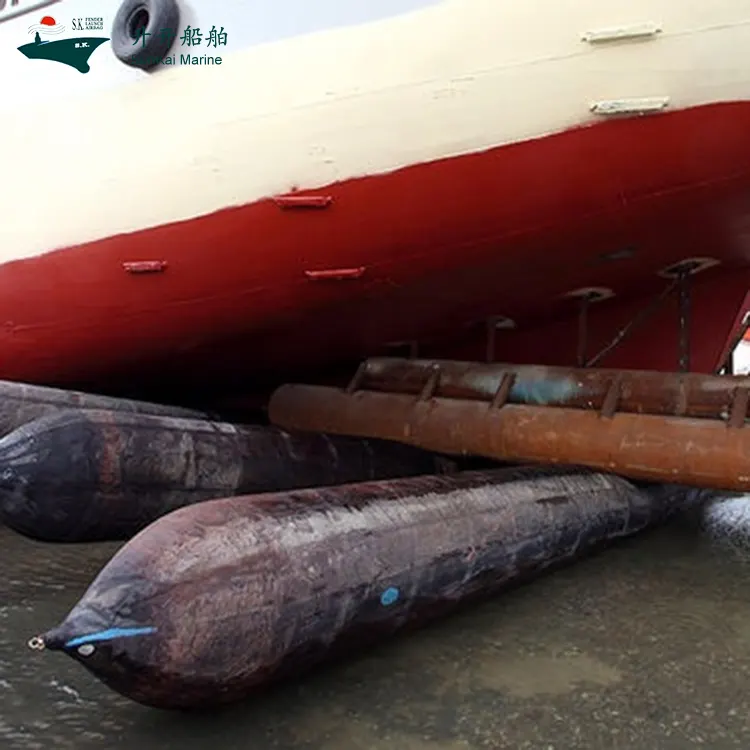
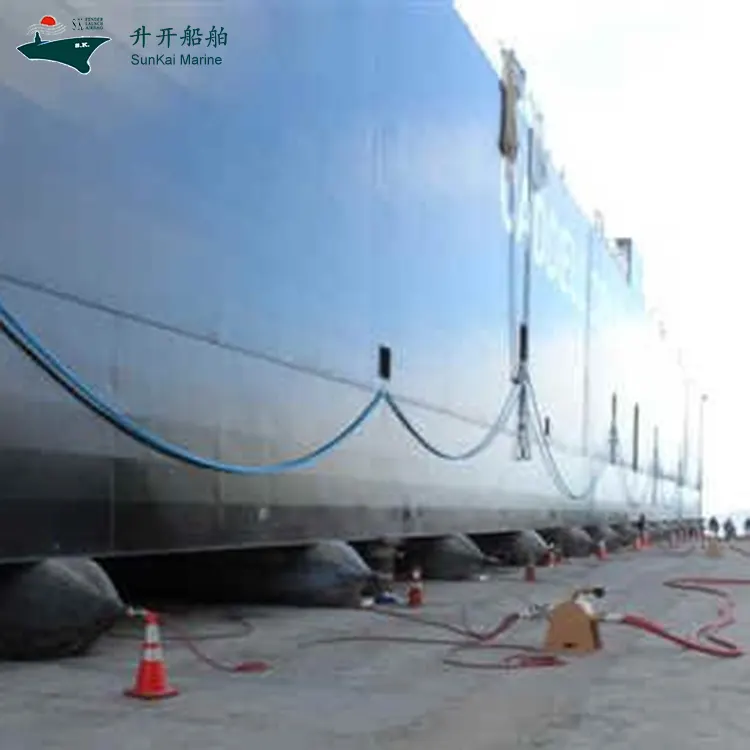
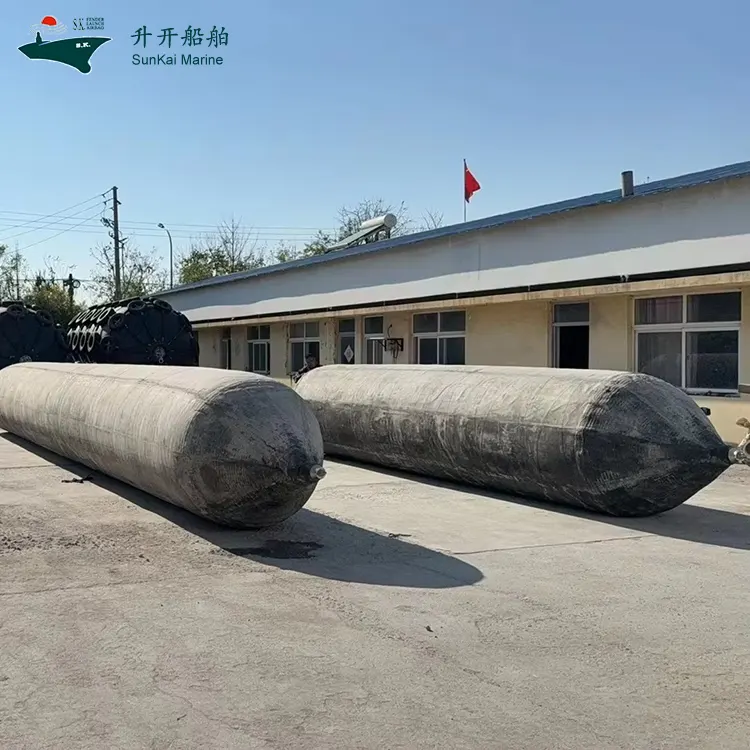
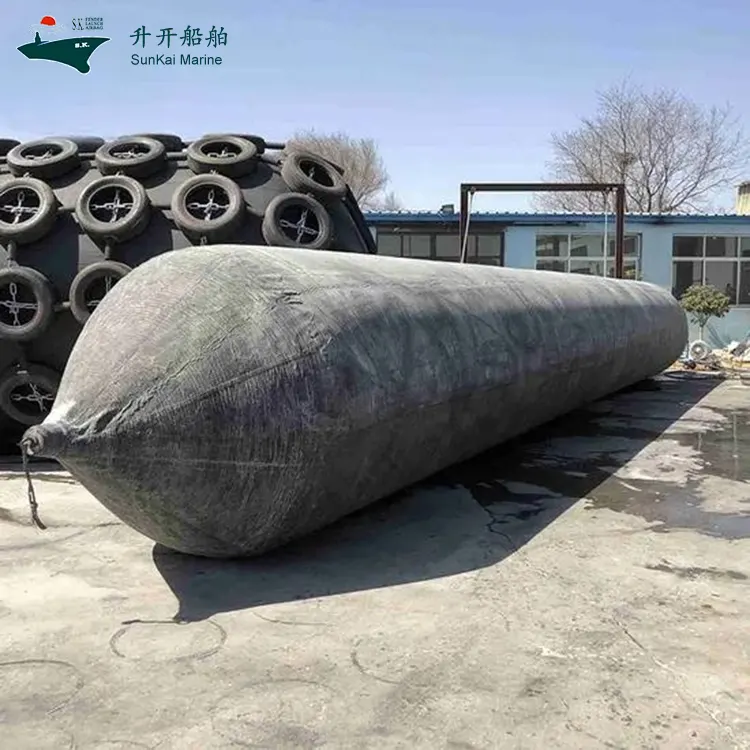
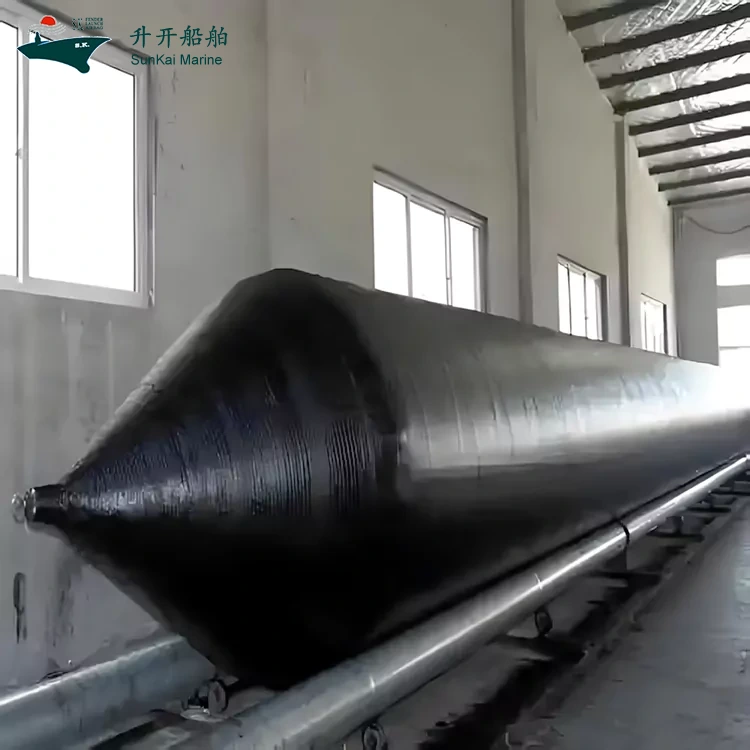
Qingdao SunKai Marine Supplies Co., Ltd. directly sells Ship Berthing Marine Airbags with seawater corrosion and UV aging resistant outer rubber, high-airtightness butyl rubber inner layer, multi-layer synthetic tire cord reinforcement, ensuring no cracking or air leakage during long-term offshore use. ISO 9001 certified and ISO 14409 compliant, suitable for long-term offshore berthing, temporary anchorage and berthing in waters without fixed terminals. Welcome domestic and overseas ship owners and port operators to request quotations, with global shipping and technical support provided.
Qingdao SunKai Marine Supplies Co., Ltd. supplies Ship Berthing Marine Airbag manufactured with UV-resistant and seawater-corrosion-resistant natural rubber outer skin, reinforced by multi-layer synthetic tire cord. Built to ISO 14409:2011 and CB/T 3795 standards, these airbags are designed for marine berthing applications including long-term offshore anchorage, temporary mooring and floating dry dock auxiliary positioning. Welcome ship owners and port management authorities to contact us for purchase.
What Is Ship Berthing Marine Airbag?
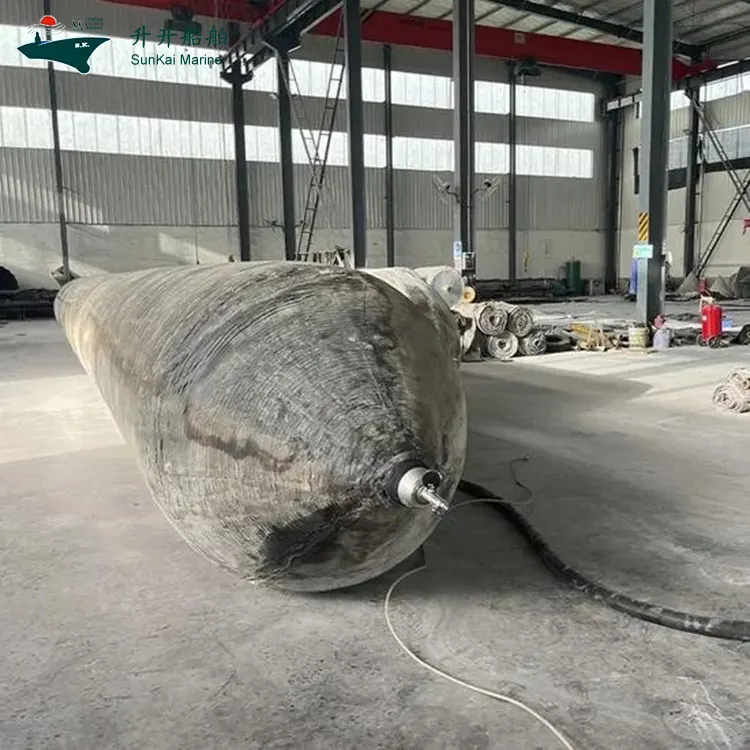
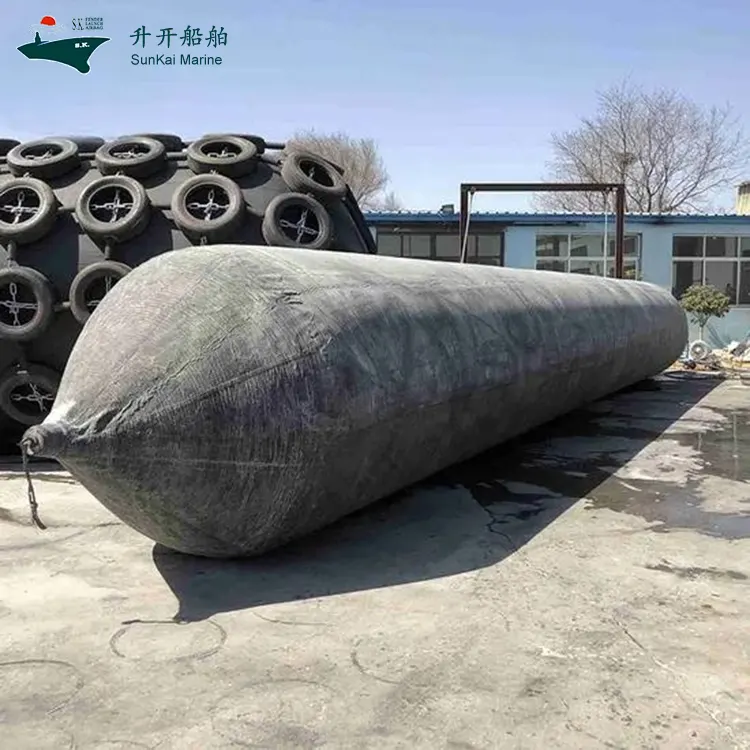
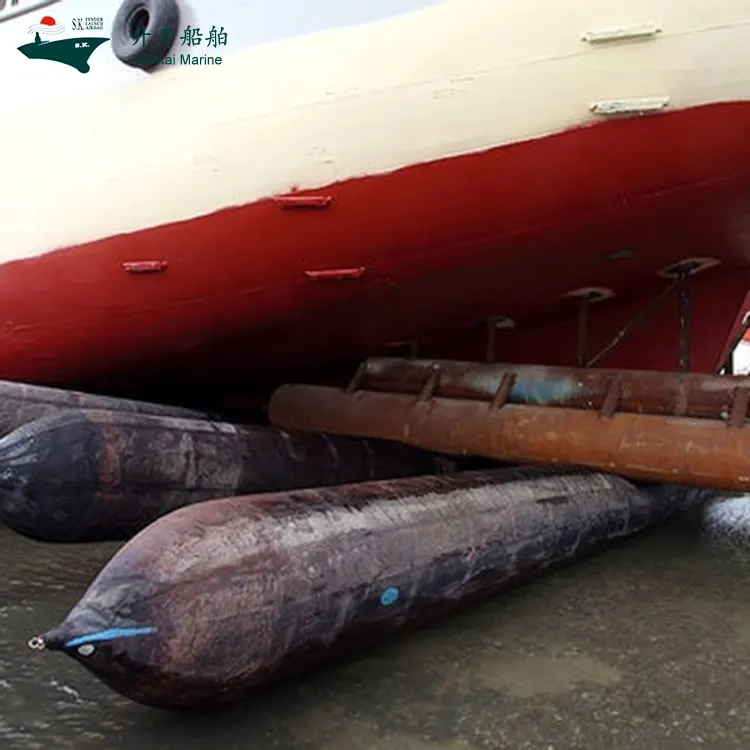
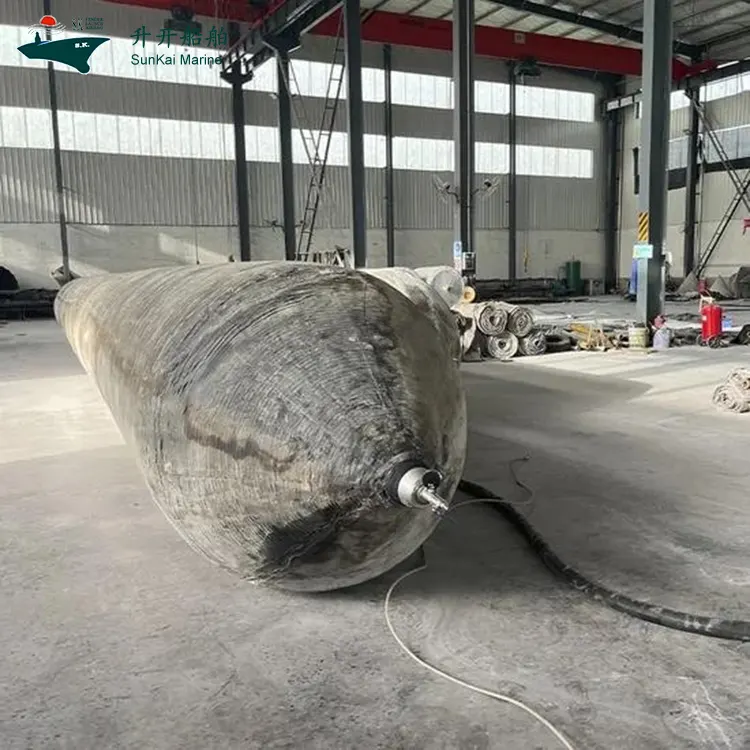
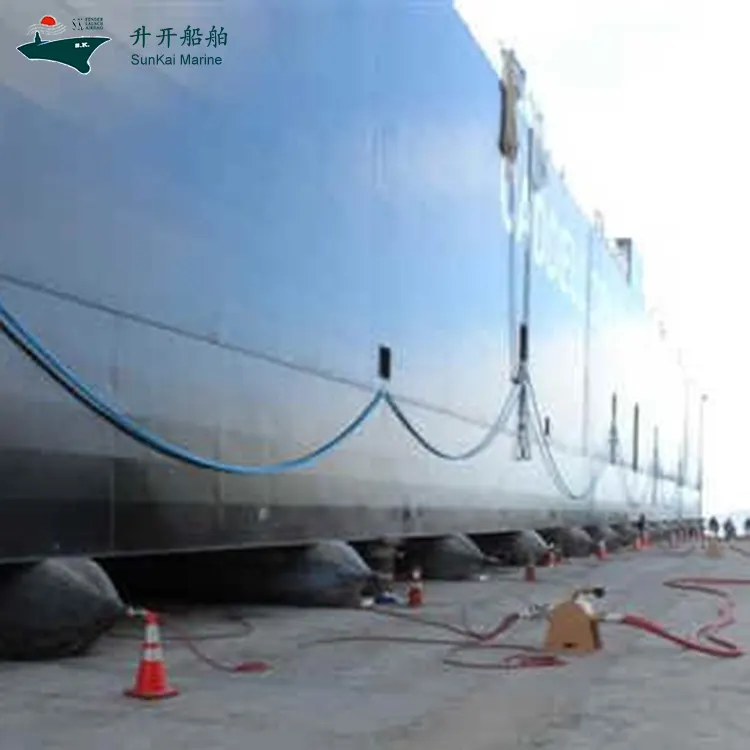
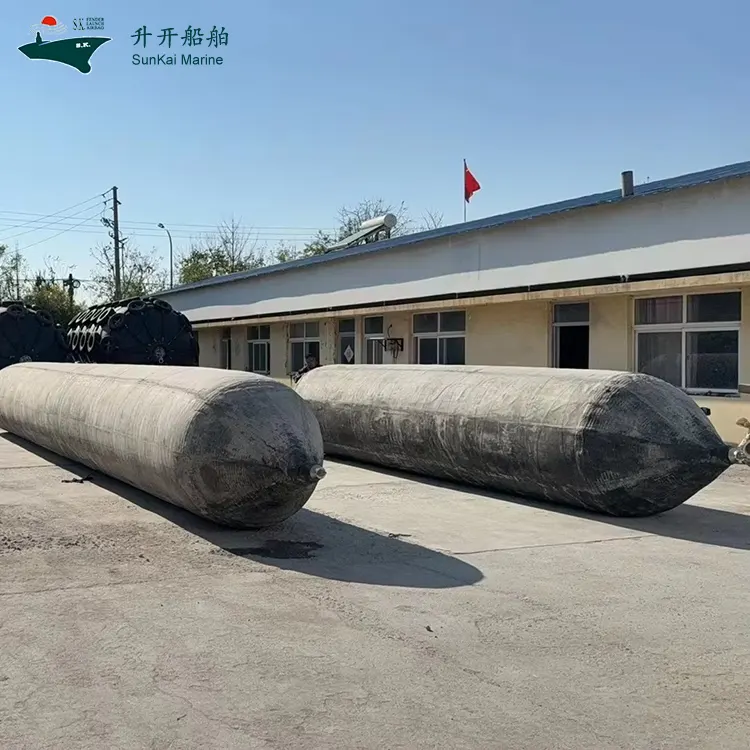
Ship Berthing Marine Airbag is a cylindrical flexible load-bearing device made of high-strength rubber and synthetic tire cord, using compressed air as the working medium. When inflated, it forms a rigid cylinder that creates low-friction rolling support between the vessel hull and ground, enabling vessel launching, haul-out, relocation, docking and berthing operations.
Compared with traditional vessel launching methods such as gravity slipways, floating dry docks and crane lifting, this product requires minimal infrastructure, offers operational flexibility, ensures safety and controllability, and is reusable. It has become the preferred equipment for small and medium-sized shipyards and vessel repair enterprises worldwide.
Key Advantages
Superior Seawater Corrosion Resistance: Outer rubber formulated with special seawater corrosion resistant compound, high-efficiency anti-aging and anti-fungal agents, ensuring no cracking, chalking or delamination during prolonged seawater immersion.
UV Aging Resistance: Rubber compound blended with UV absorbers and light stabilizers, reducing outdoor aging rate by over 50% under prolonged sun exposure, maintaining rubber elasticity and strength.
High Airtightness Design: Inner layer made of butyl rubber with gas permeability only 1/10 of natural rubber, slow pressure drop during long-term berthing, reducing frequent air replenishment.
Wave & Wind Stability: Cylindrical inflatable structure provides excellent energy absorption in waves, effectively attenuating vessel rolling and ensuring berthing safety.
Easy Deployment & Handling: Lightweight and foldable for storage, no heavy lifting equipment required, transport and on-site inflation deployment achievable with small vessels.
Multi-Scene Versatility: Suitable for long-term offshore berthing, temporary anchorage, floating dry dock auxiliary positioning, berthing in waters without fixed terminals and emergency shelter scenarios.
Specifications
Main specifications of this product series. Other sizes can be customized upon request.
Model
Diameter(m)
Init.Press(kPa)
Rated Press(kPa)
Capacity(kN/m)
Min.Burst(kPa)
YB-3
0.8
25
130
114
390
YB-4
1.0
18
100
110
300
YB-5
1.2
15
85
112
260
YB-6
1.5
13
70
115
210
YB-7
1.8
16
90
178
270
YB-8
2.0
14
80
185
240
YB-9
2.5
10
60
200
180
Selection Guide
Proper selection is critical for ensuring safety and economy in vessel launching and haul-out operations. Consider the following factors:
· Vessel Parameters: Calculate required total load capacity based on DWT, overall length, beam, depth and lightship weight.
· Airbag Diameter: Larger diameter provides greater load-bearing area and higher capacity per unit length, but requires more under-keel clearance. Common choice: 1.0m-2.0m.
· Airbag Length: Effective length should exceed vessel beam by 0.8-1.2m on each side for stable hull support. Common length: 6m-18m.
· Cord Layers: More layers provide higher load capacity and safety factor. Generally 4-8 layers for launching, 8-12 layers for heavy vessels or high-pressure conditions.
· Working Pressure: Calculate required pressure based on vessel weight and airbag quantity, ensuring it does not exceed rated working pressure with adequate safety margin.
· Quantity Configuration: Determine quantity based on vessel weight and single-airbag capacity, typically one every 3-5m along hull length, plus 1-2 standby units.
· Slipway Conditions: Consider slipway gradient, ground flatness and ground material, which affect airbag stress and rolling performance.
Quality Inspection
Qingdao SunKai Marine Supplies Co., Ltd. has established a comprehensive quality management system. Every airbag undergoes strict inspection before delivery:
Appearance Inspection: Check surface smoothness, no cracks, bubbles, delamination or impurities; verify metal end fittings are secure and markings are clear and complete.
Dimensional Measurement: Measure diameter and effective length at rated working pressure; dimensional deviation should not exceed +/-3%, complying with ISO 14409 standards.
Airtightness Test: Inflate to rated working pressure under no-load condition, hold for 1 hour; pressure drop should not exceed 5% of rated pressure, ensuring no leakage.
Compression Deformation Test: Measure internal pressure and load capacity per unit length at 70% compression deformation rate, verifying compliance with design specifications.
Burst Test (Sampling): Sample each batch for burst testing; burst pressure should be no less than 3 times rated working pressure, verifying safety margin.
Rebound Recovery Test: After compression to 70% deformation and release, check rebound recovery capability, ensuring no permanent deformation or structural damage.
Material Performance Testing: Test outer and inner rubber for tensile strength, elongation at break, hardness, aging resistance and tear resistance.
Delivery Certificate: After all inspection items pass, issue product delivery certificate, inspection report and user manual, accompanying each shipment.
Frequently Asked Questions (FAQ)
Q1: How to select the right airbag model?
A1: Selection considers vessel DWT, beam, lightship weight, and slipway gradient. Effective length should exceed beam by 0.8-1.2m per side; diameter 1.0-2.0m; cord layers 4-10 based on load requirements.
Q2: What is the safety factor of marine airbags?
A2: Standard models have a safety factor of no less than 3.0, with premium models reaching 4.5. This means the airbag can withstand up to 3 times its rated pressure before potential rupture.
Q3: What if pressure varies among multiple airbags?
A3: Inflate through a common manifold system to ensure uniform pressure. If individual airbags show significant deviation, adjust separately to standard pressure to avoid uneven loading.
Q4: Should airbags be inflated during storage?
A4: Yes. For long-term storage, inflate to approximately 0.02MPa to maintain cylindrical shape, preventing folding deformation and rubber adhesion. Store in cool, dry, ventilated area.
Send your inquiry to SunKai now! Get a quick quote for our quality Marine Airbag, Marine Fender, Marine Buoys. Our China team offers professional support.
We use cookies to offer you a better browsing experience, analyze site traffic and personalize content. By using this site, you agree to our use of cookies. Privacy Policy