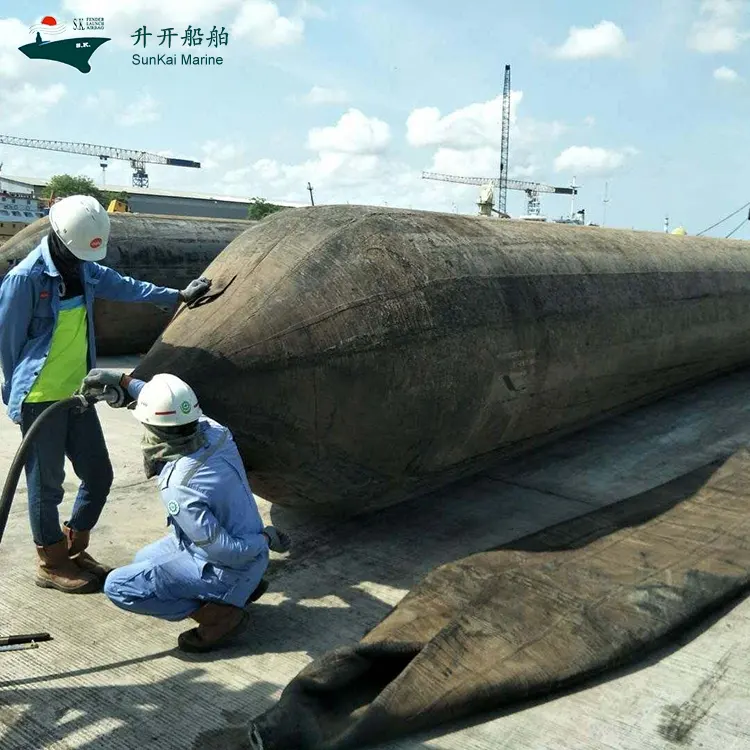
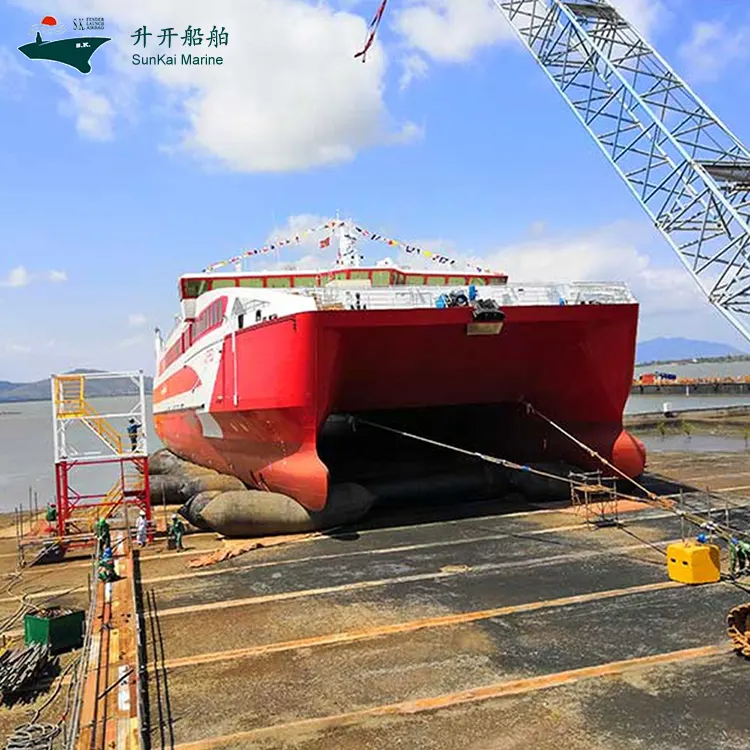
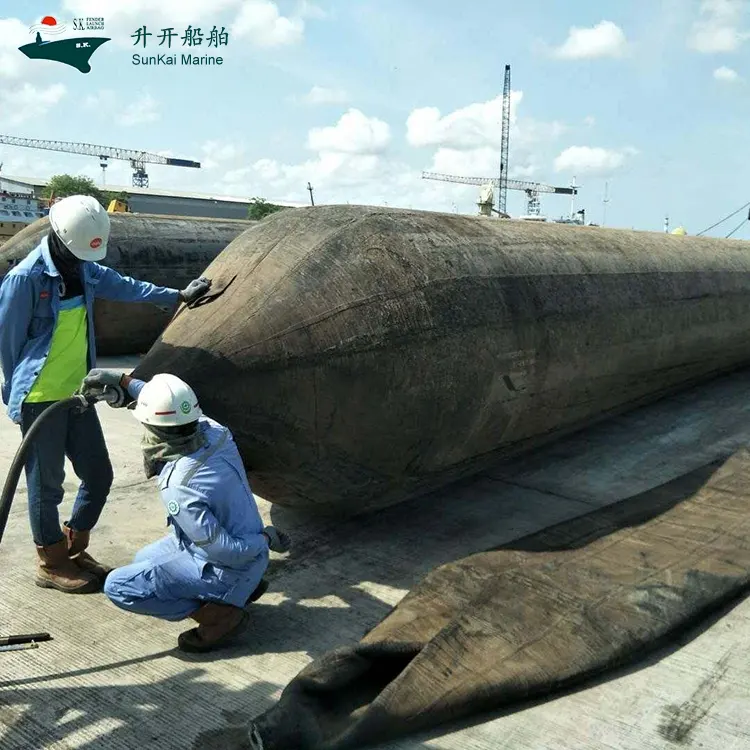
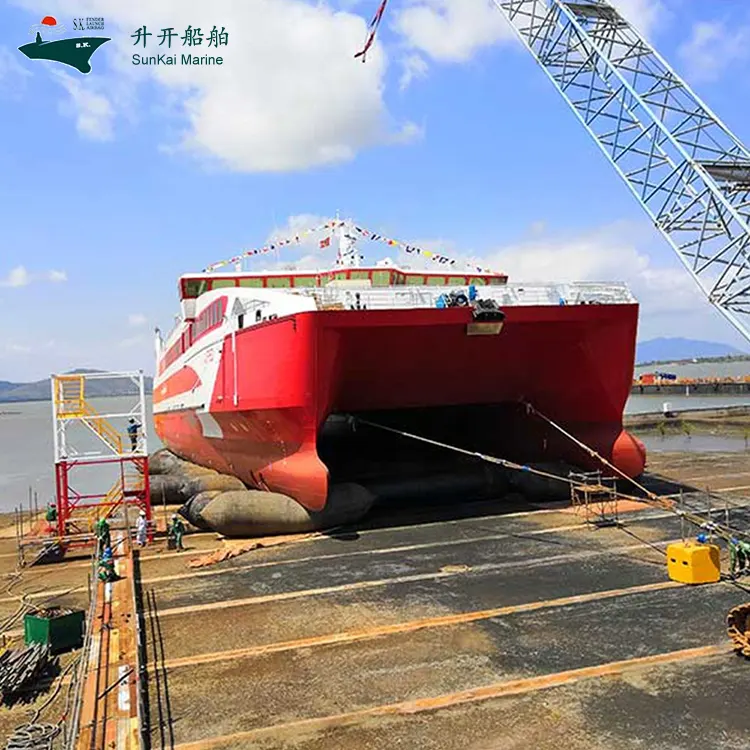
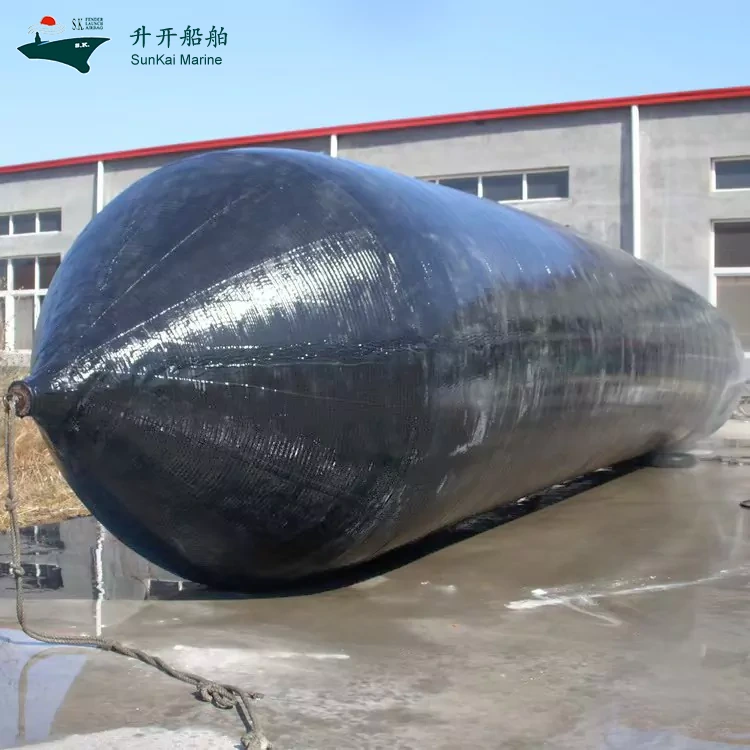
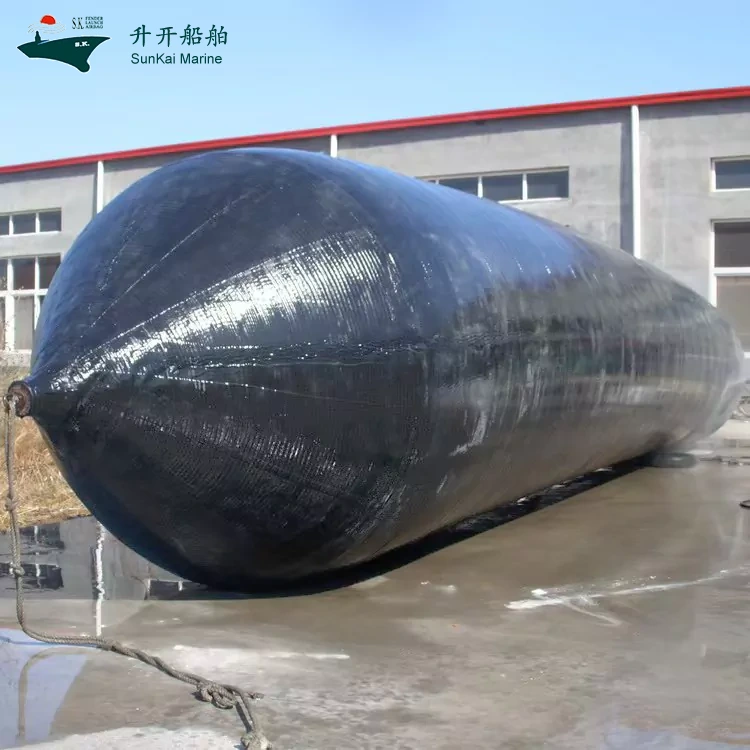
Qingdao SunKai Marine Supplies Co., Ltd. supplies Ship Repair Inflatable Airbags with flexible lifting and reusable design, suitable for vessel haul-out repair, hull inspection, cleaning, painting and maintenance. Requiring no permanent dry dock facilities, vessel haul-out completed on flat ground or shore slopes, reducing ship repair yard infrastructure investment by over 60%. ISO 9001 certified and CB/T 3795 compliant. Welcome ship repair yards and maintenance units to contact us for purchase inquiries, with supporting inflation equipment and repair tools provided.Qingdao SunKai Marine Supplies Co., Ltd. supplies Ship Repair Inflatable Airbags with flexible lifting and reusable design, suitable for vessel haul-out repair, hull inspection, cleaning, painting and maintenance. Requiring no permanent dry dock facilities, vessel haul-out completed on flat ground or shore slopes, reducing ship repair yard infrastructure investment by over 60%. ISO 9001 certified and CB/T 3795 compliant. Welcome ship repair yards and maintenance units to contact us for purchase inquiries, with supporting inflation equipment and repair tools provided.
Qingdao SunKai Marine Supplies Co., Ltd. offers Ship Repair Inflatable Airbag, a reusable inflatable lifting system that reduces infrastructure investment for ship repair yards by enabling vessel haul-out without expensive permanent dry dock facilities. Manufactured to ISO 14409:2011 standards with multi-layer tire cord reinforcement and durable natural rubber, these airbags support flexible lifting and repeated haul-out cycles for hull inspection, cleaning, painting and maintenance. Welcome ship repair enterprises to place bulk orders.
What Is Ship Repair Inflatable Airbag?
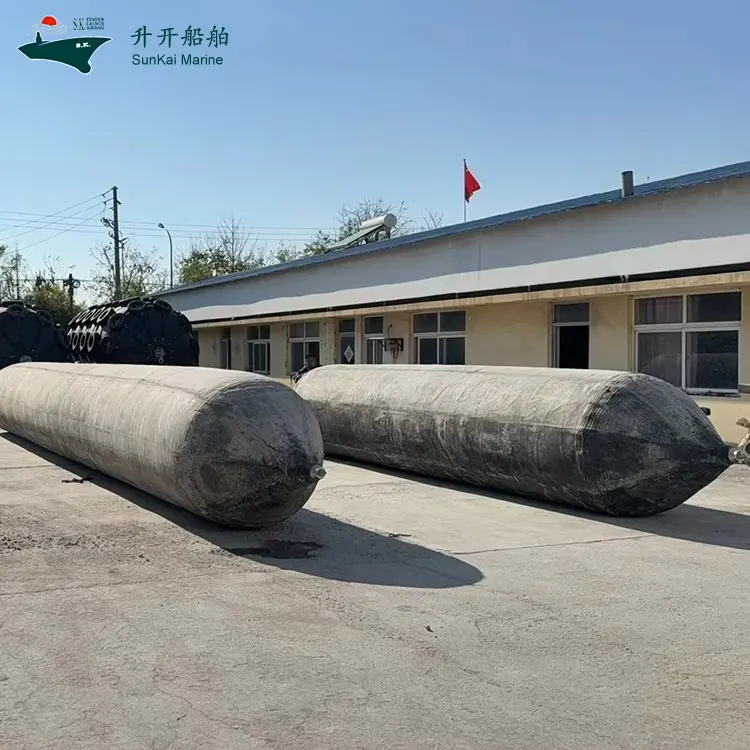
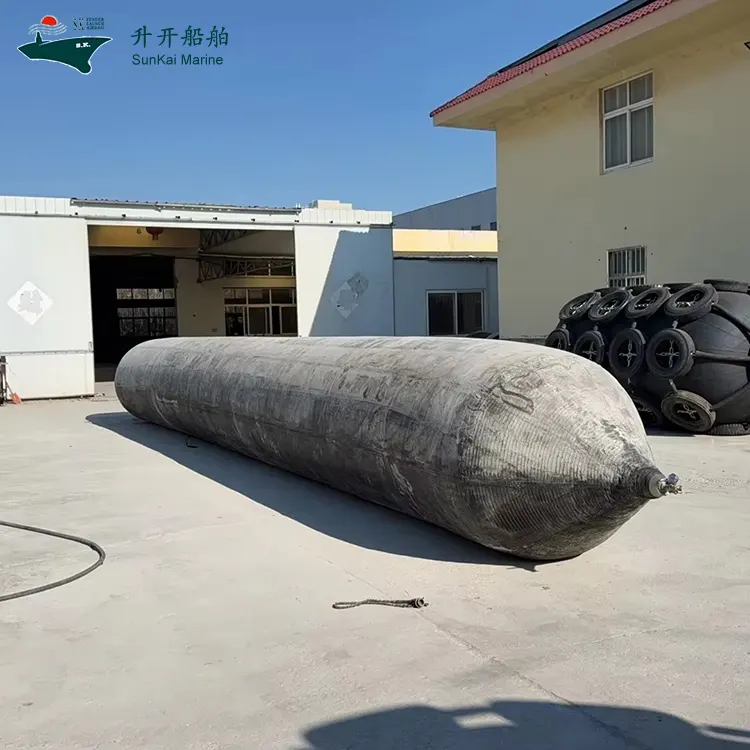
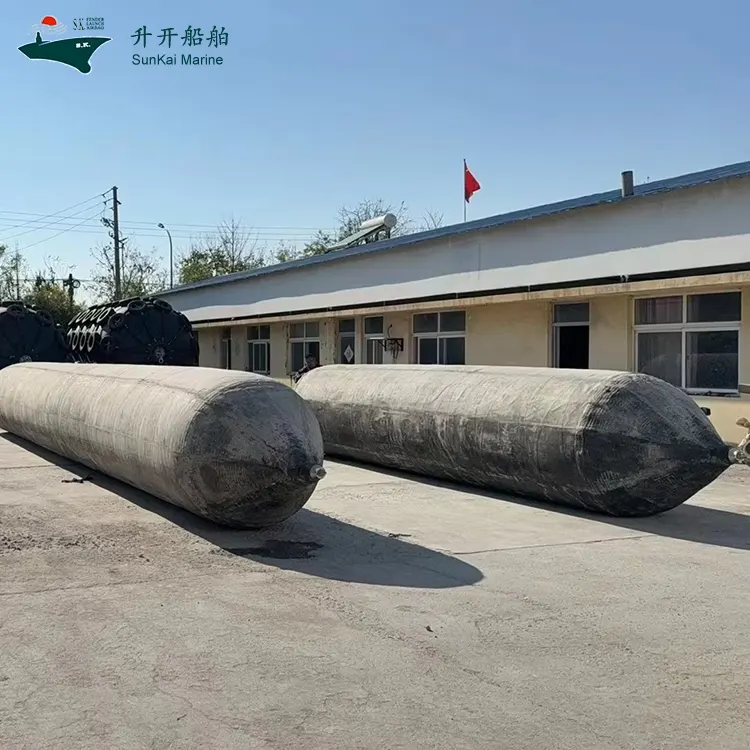
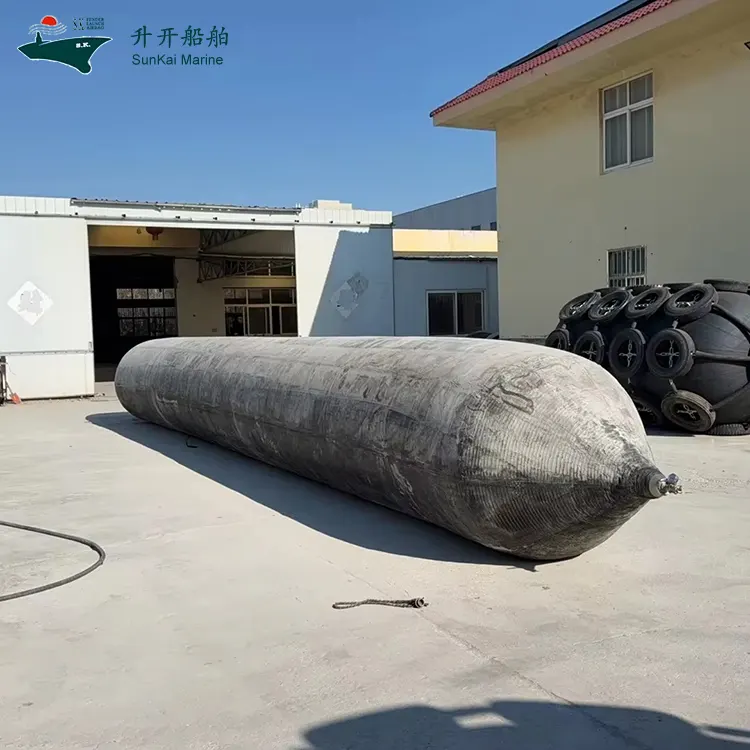
Ship Repair Inflatable Airbag is a cylindrical flexible load-bearing device made of high-strength rubber and synthetic tire cord, using compressed air as the working medium. When inflated, it forms a rigid cylinder that creates low-friction rolling support between the vessel hull and ground, enabling vessel launching, haul-out, relocation, docking and berthing operations.
Compared with traditional vessel launching methods such as gravity slipways, floating dry docks and crane lifting, this product requires minimal infrastructure, offers operational flexibility, ensures safety and controllability, and is reusable. It has become the preferred equipment for small and medium-sized shipyards and vessel repair enterprises worldwide.
Specifications
Main specifications of this product series. Other sizes can be customized upon request.
Model
Diameter(m)
Init.Press(kPa)
Rated Press(kPa)
Capacity(kN/m)
Min.Burst(kPa)
YB-3
0.8
25
130
114
390
YB-4
1.0
18
100
110
300
YB-5
1.2
15
85
112
260
YB-6
1.5
13
70
115
210
YB-7
1.8
16
90
178
270
YB-8
2.0
14
80
185
240
YB-9
2.5
10
60
200
180
Product Features
Flexible Lifting: Precisely control load-bearing height and stiffness by adjusting inflation pressure, adapting to different vessel types and operating conditions.
Low Infrastructure Dependence: No need for expensive dry docks or slipways; only flat ground or shore slope required, especially suitable for small and medium-sized shipyards and temporary work sites.
High Operational Efficiency: From preparation to completion of launching/haul-out typically takes only a few hours, much faster than traditional dry dock operations, significantly shortening vessel repair and construction cycles.
Safety Buffering Performance: Rubber airbags provide excellent elastic buffering capability, effectively absorbing impacts and vibrations during operations, protecting hull structure from damage.
Outstanding Economy: Reusable for 200-300 cycles, single-use cost far lower than dry dock rental or slipway maintenance, substantially reducing infrastructure costs for vessel repair and construction.
Strong Environmental Adaptability: Usable in different water environments including seacoast, inland rivers and lakes, adapting to various ground conditions such as sediment, reef and concrete.
Usage Cautions
1. Strictly control operating pressure; never exceed the rated working pressure marked on the product nameplate, as overpressure may cause airbag rupture.
2. Ground and hull surfaces in contact with airbags must be free of sharp protruding objects such as rebar ends, crushed stone or burrs, to prevent puncturing the rubber skin.
3. Avoid twisting along the airbag length direction, as twisting causes uneven cord stress and reduces load capacity and service life.
4. After inflation, avoid concentrated load impacts; when lifting vessels, apply force evenly to prevent individual airbags from withstanding excessive concentrated loads.
5. Inflation should be slow and uniform; multiple airbags should be inflated alternately to ensure stable hull lifting, avoiding tilting and slipping.
6. Before use, inspect airbag appearance for scratches, bulges, delamination, and check metal valves for security; address issues promptly or replace.
7. After use in seawater or muddy environments, promptly rinse the airbag surface with clean water to remove salt and sediment, preventing corrosion and abrasion.
8. Store away from heat sources, open flames, acids, alkalis, oils and organic solvents; avoid direct sunlight and prolonged UV exposure.
Common Errors & Correct Methods
In practical use of marine airbags, the following erroneous operations may cause safety hazards or product damage. Please avoid them:
X Error: Overpressure Inflation
Check: Correct: Strictly inflate per product nameplate and operational plan; use calibrated pressure gauges for monitoring; inflate in stages, ensuring pressure deviation of each airbag does not exceed +/-10%.
X Error: Sharp Objects on Ground Not Cleared
Check: Correct: Thoroughly clear crushed stone, rebar ends, metal fragments and other sharp objects from slipways and ramps before operations; lay rubber mats or steel plates for protection if necessary.
X Error: Insufficient Airbag Quantity
Check: Correct: Precisely calculate required quantity based on vessel weight and single-airbag capacity, ensuring actual load on each airbag does not exceed 70% of rated value, plus 1-2 standby units.
X Error: Excessive Traction Speed
Check: Correct: Control vessel movement speed within 3-5 meters per minute; avoid sudden stops and starts to prevent local overloading or slipping of airbags due to inertial impact.
X Error: Storing Without Cleaning After Use
Check: Correct: Rinse thoroughly with clean water after each use, dry and apply talcum powder, store with low-pressure inflation, avoiding sediment abrasion and salt corrosion.
X Error: Neglecting Periodic Inspection
Check: Correct: Establish airbag usage log; inspect appearance before and after each use; perform airtightness test every 3 months; conduct comprehensive performance inspection annually.
X Error: Deflating with Sharp Objects
Check: Correct: Deflate slowly through valve fittings; never use knives or sharp objects to puncture for deflation, as this may cause irreparable damage.
Shipping & Packaging
Packaging Method:
After passing inspection, products undergo the following packaging processing:
· Inflate interior with approximately 0.02MPa low-pressure air to maintain cylindrical shape and prevent folding deformation.
· Evenly apply talcum powder to outer surface to prevent rubber adhesion.
· Wrap entirely with thick waterproof woven cloth or PVC waterproof membrane to prevent moisture and contamination during transit.
· Individually wrap metal valves and valve components with bubble film for protection against collision damage.
· Depending on quantity and dimensions, choose wooden pallet fixation or bulk container shipping.
Shipping & Delivery:
Standard model orders ship within 7-15 days after confirmation; custom models ship within 15-30 days. Domestic delivery via professional logistics to factory; international shipping available via full-container/LCL sea freight or expedited air freight. Each shipment includes product certificate, inspection report, user manual and maintenance guide.
Frequently Asked Questions (FAQ)
Q1: How to arrange airbags for vessel haul-out?
A1: Place airbags perpendicular to hull axis, spaced every 3-5m along ship length. First use lifting airbags to raise vessel, then insert rolling airbags, and use winch traction to pull vessel to repair area. Maintain vessel level.
Q2: Can airbags support vessels on land long-term?
A2: Long-term (over 30 days) complete reliance on airbag support is not recommended. Install rigid supports like wooden blocks under the hull, with airbags only as auxiliary, to avoid rubber fatigue from prolonged compression.
Q3: Should airbags remain inflated during repair?
A3: If vessel is supported by airbags, maintain inflated state and check pressure regularly. If rigid supports are installed, airbags can be deflated and removed for maintenance. Re-inflate after repair to launch.
Q4: What accessories are included in standard delivery?
A4: Standard delivery includes: airbag body, metal valve and ball valve assembly (pre-installed), pressure gauge, inflation hose (5m), product certificate, inspection report, user manual, and maintenance guide.
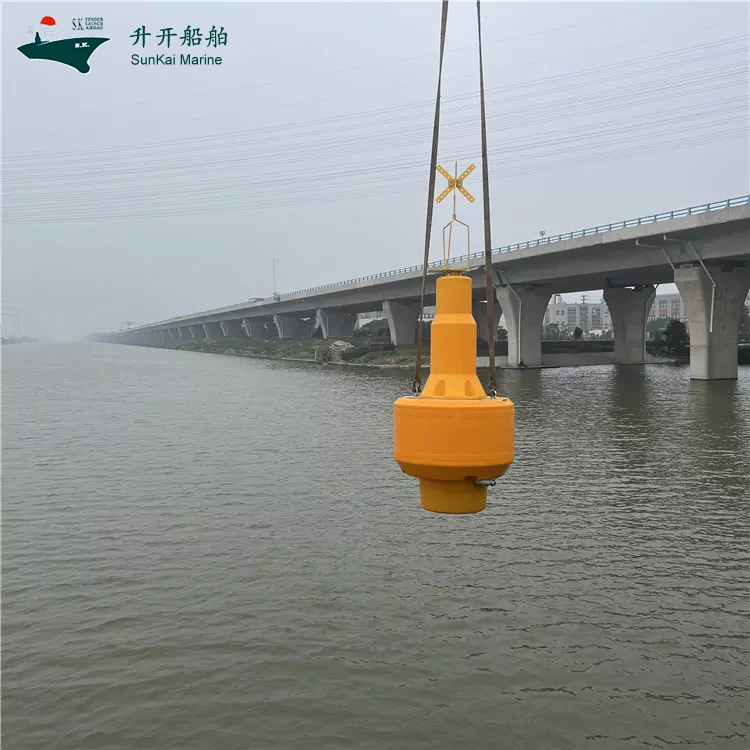
Send your inquiry to SunKai now! Get a quick quote for our quality Marine Airbag, Marine Fender, Marine Buoys. Our China team offers professional support.
We use cookies to offer you a better browsing experience, analyze site traffic and personalize content. By using this site, you agree to our use of cookies. Privacy Policy