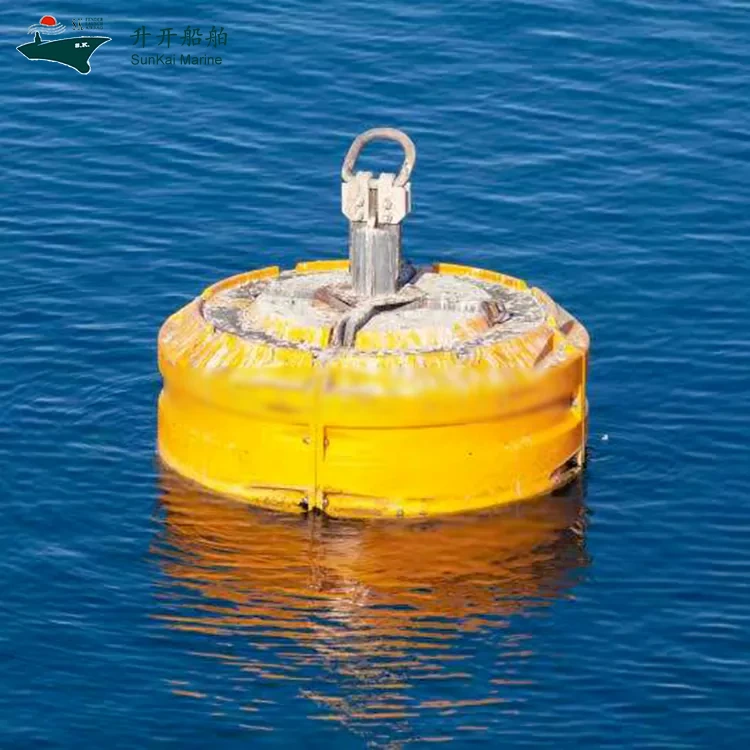
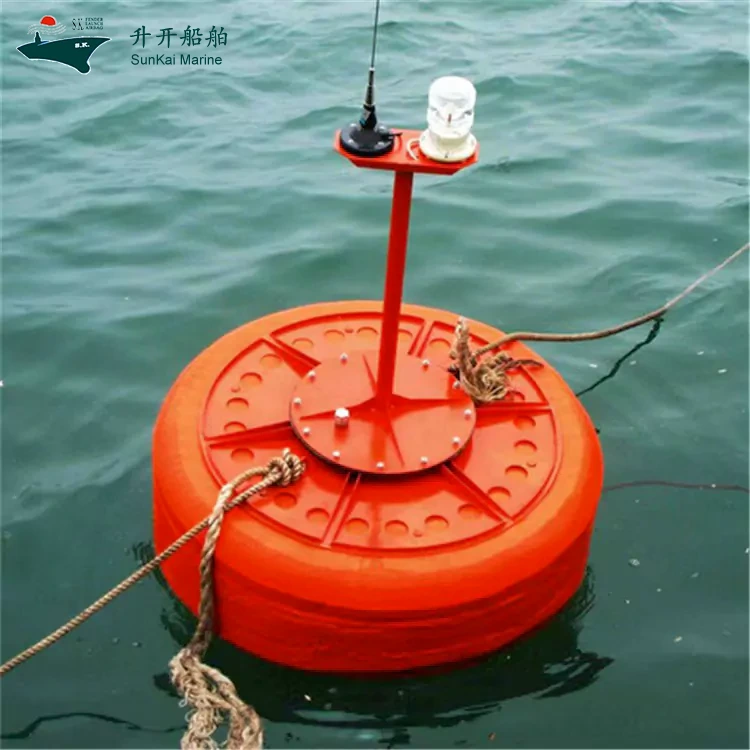
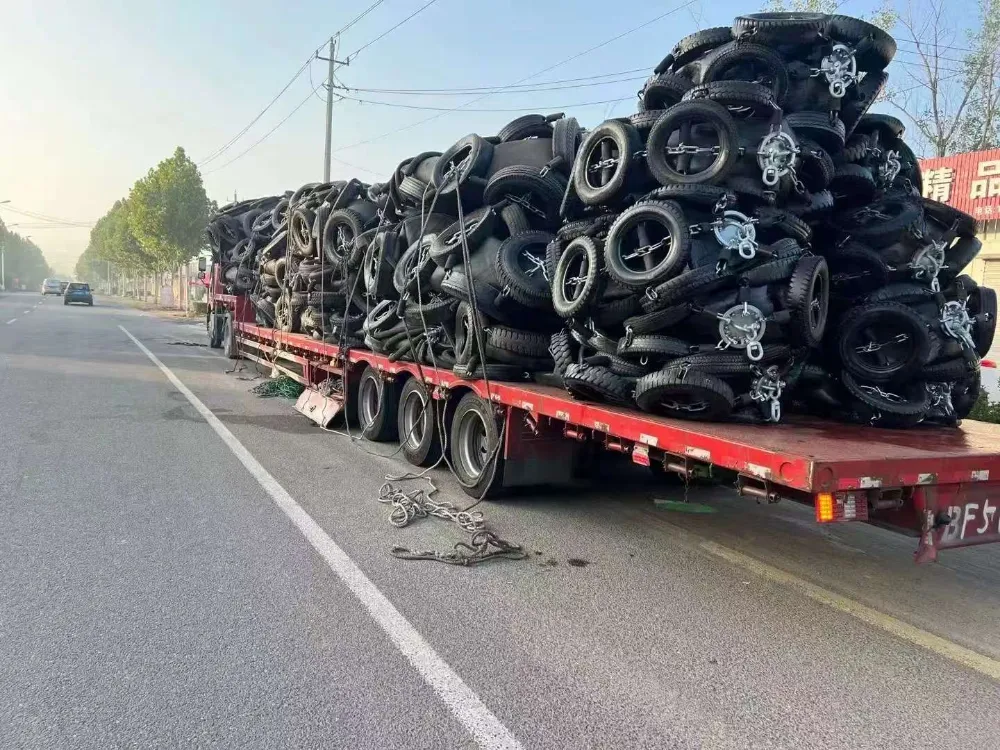
Floating marine buoys play a critical role in collecting real-time data for marine and coastal environments. They provide continuous monitoring of water quality, weather conditions, and ocean currents, enabling authorities and researchers to make informed decisions. In our factory, we design and manufacture marine buoys that withstand harsh maritime conditions while delivering accurate environmental readings. Our team at Qingdao SunKai Marine Supplies Co., Ltd. works closely with clients to ensure that our products meet the precise requirements of environmental monitoring programs.
The choice of materials and the structural design of Marine Buoys directly affect their durability and operational reliability. Buoys are often constructed from high-density polyethylene, reinforced composites, or corrosion-resistant metals. Each material offers specific advantages, including impact resistance, UV stability, and longevity in saltwater environments. Our engineers carefully evaluate the conditions at the deployment site before recommending the appropriate material for each project. Using our Marine Buoys, organizations can maintain continuous monitoring without frequent replacements or maintenance interruptions.
Design elements such as buoyancy chambers, hull shape, and mooring attachments also influence stability and data collection accuracy. In our factory, we optimize these features to minimize drift and enhance sensor performance. This ensures that each Marine Buoy maintains position even under challenging wave and current conditions.
Marine Buoys serve as platforms for multiple types of environmental sensors. Commonly integrated devices include temperature probes, salinity meters, pH sensors, dissolved oxygen detectors, turbidity meters, and GPS modules. These sensors enable continuous measurement of physical and chemical properties of water bodies. Our team installs and calibrates sensors to ensure precise readings and long-term reliability. Qingdao SunKai Marine Supplies Co., Ltd. provides customizable options to meet specific research or regulatory requirements, offering both standard and advanced sensor packages.
The following table summarizes typical sensors used in Marine Buoys and their corresponding monitoring functions:
| Sensor Type | Function | Application | Notes |
| Temperature Probe | Measures water temperature | Climate studies, marine biology research | High-precision, corrosion-resistant |
| Salinity Meter | Measures salt concentration | Oceanographic surveys, water quality monitoring | Stable readings over long deployments |
| pH Sensor | Measures acidity/alkalinity | Environmental assessment, pollution tracking | Resistant to fouling and chemical interference |
| Dissolved Oxygen Detector | Monitors oxygen content | Marine life studies, ecological health assessment | High sensitivity, reliable over temperature changes |
| Turbidity Meter | Measures water clarity | Pollution detection, sediment transport studies | Accurate in varying water conditions |
| GPS Module | Tracks buoy position | Current mapping, drift correction | High precision, real-time data logging |
Environmental monitoring often requires Marine Buoys to operate in extreme conditions, including storms, high waves, and fluctuating temperatures. Stability, sensor calibration, and protective housing are essential to maintaining data accuracy. Our engineers design hulls with optimized hydrodynamics and low center of gravity to reduce tilting and oscillation. In our factory, we rigorously test each Marine Buoy to ensure resistance against mechanical stress and environmental wear. Utilizing our products allows agencies to rely on continuous, accurate readings without frequent human intervention.
Marine Buoys typically rely on renewable energy sources for long-term deployment. Solar panels, small wind turbines, and energy storage systems allow the buoys to operate unattended for months. At Qingdao SunKai Marine Supplies Co., Ltd., our Marine Buoys are equipped with efficient power management systems to support sensors, GPS, and communication modules. This ensures data transmission remains consistent, enabling real-time monitoring and reporting. Our team customizes energy systems depending on deployment location, climate conditions, and sensor requirements.
Marine Buoys are fitted with wireless communication systems, such as GSM, satellite, or radio frequency modules, to transmit collected data to onshore stations. Our engineers configure communication protocols to maximize reliability and minimize data loss. In our factory, we test each Marine Buoy’s transmission system under simulated maritime conditions to ensure performance. Reliable communication is crucial for early warning systems, pollution tracking, and environmental research, making our Marine Buoys an integral component of any monitoring strategy.
The table below compares common data transmission options and their characteristics:
| Transmission Type | Range | Reliability | Typical Use |
| GSM Module | Up to 20 km offshore | High in coastal areas | Short-range monitoring and nearshore studies |
| Satellite Link | Global coverage | High, weather-dependent | Remote offshore research and oceanographic studies |
| RF Module | 1–10 km | Moderate, line-of-sight | Port and harbor monitoring applications |
Q1: How do Marine Buoys contribute to early warning systems?
Marine Buoys provide real-time environmental data that can detect anomalies, such as sudden temperature shifts, salinity changes, or pollutant presence. This data enables authorities to issue timely alerts for marine hazards, algal blooms, or environmental emergencies.
Q2: What maintenance practices ensure long-term performance of Marine Buoys?
Regular inspection of hull integrity, sensor calibration, and power systems is essential. Our team recommends scheduled cleaning to prevent biofouling and routine testing of communication modules. Following these procedures extends service life and maintains accuracy.
Q3: How does buoy design affect data reliability in varying ocean conditions?
The buoy’s shape, weight distribution, and mooring system influence stability. Our designs minimize tilting and oscillation, ensuring sensors remain properly positioned and readings are accurate despite waves or wind conditions.
Floating Marine Buoys are indispensable for comprehensive environmental monitoring, providing continuous data on water quality, currents, and atmospheric conditions. Our team at Qingdao SunKai Marine Supplies Co., Ltd. specializes in designing Marine Buoys that combine durability, accurate sensors, and reliable communication systems. By selecting our products, agencies and researchers can ensure effective long-term monitoring with minimal maintenance. Contact our technical team today to discuss your project requirements and discover how our Marine Buoys can enhance your environmental monitoring capabilities.
Phone: +86-15853213129
Mobile: +86-15908962397
Address:No. 869, Yanqing Road, Tongji Street, Jimo District, Qingdao City, Shandong Province, China
Copyright © 2025 Qingdao SunKai Marine Supplies Co., Ltd. All Rights Reserved.