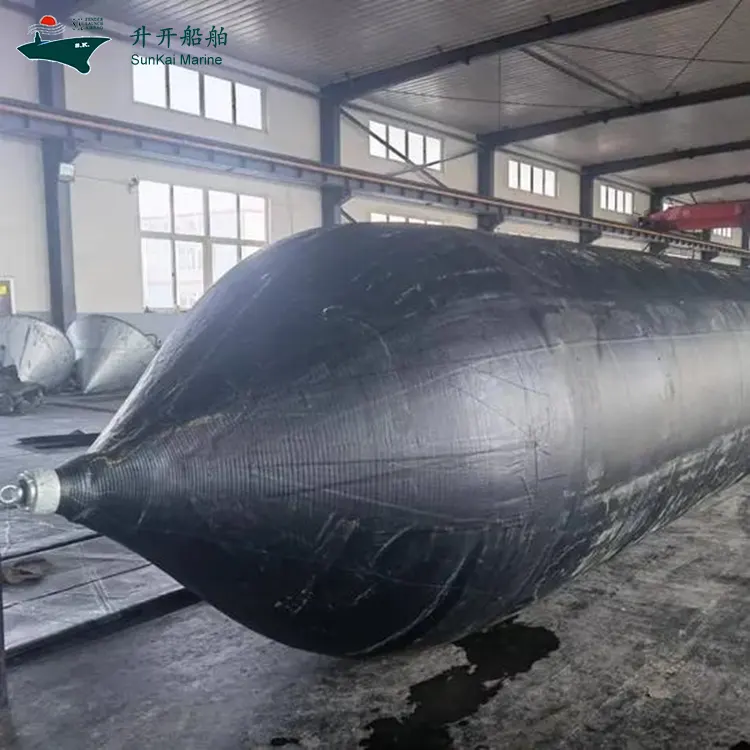
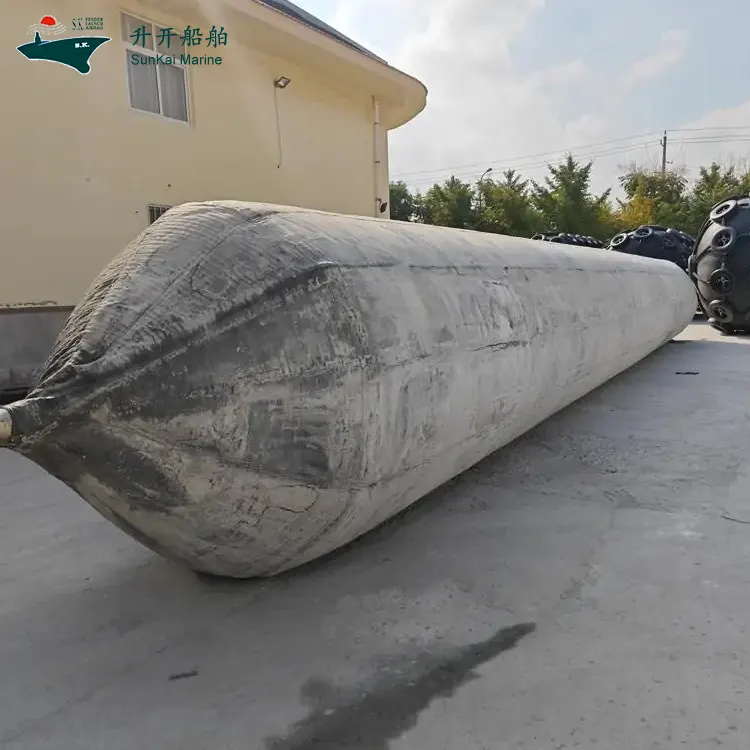
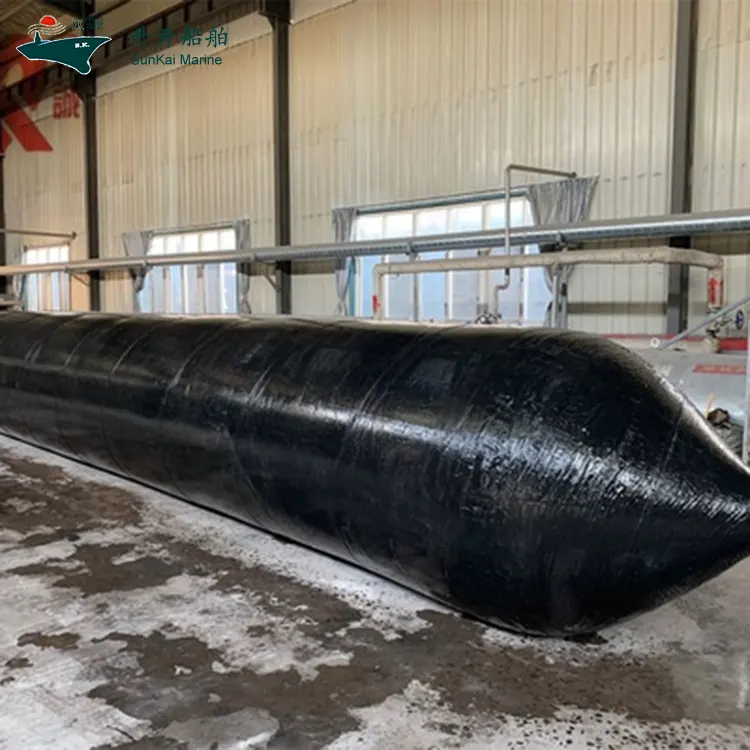
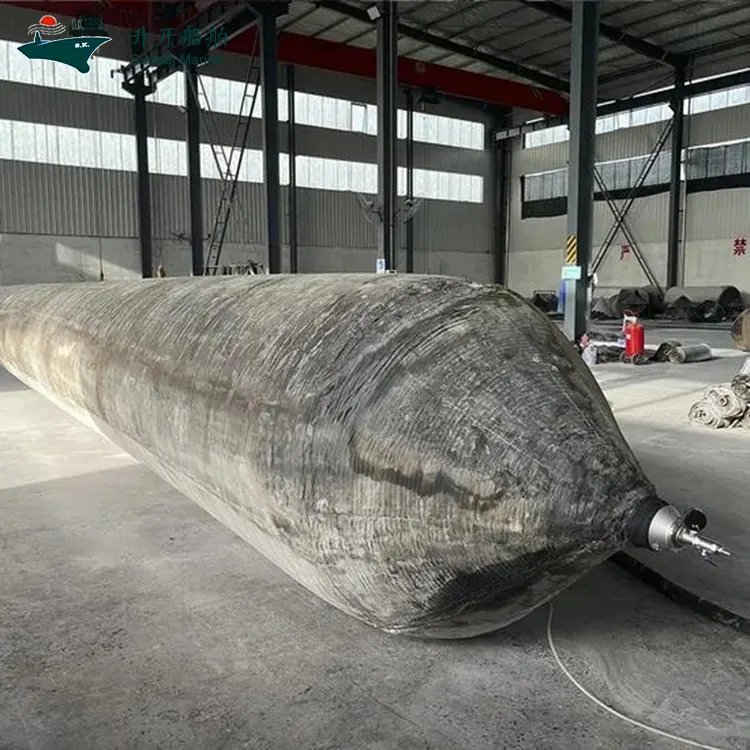
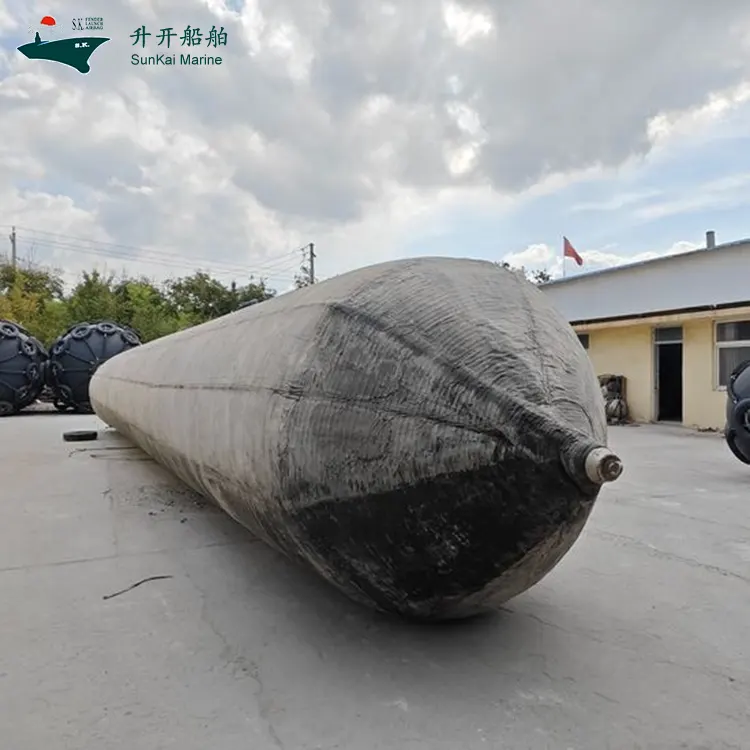
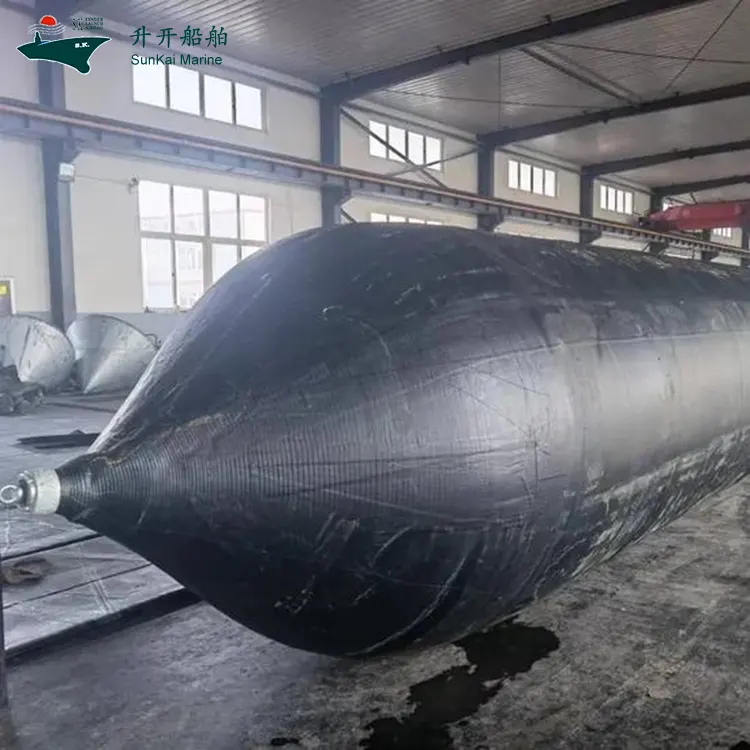
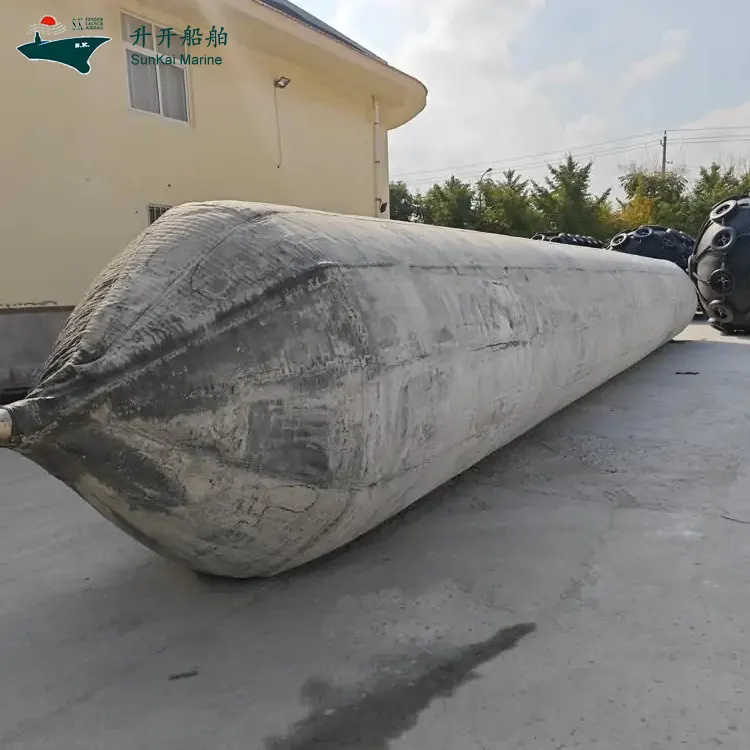
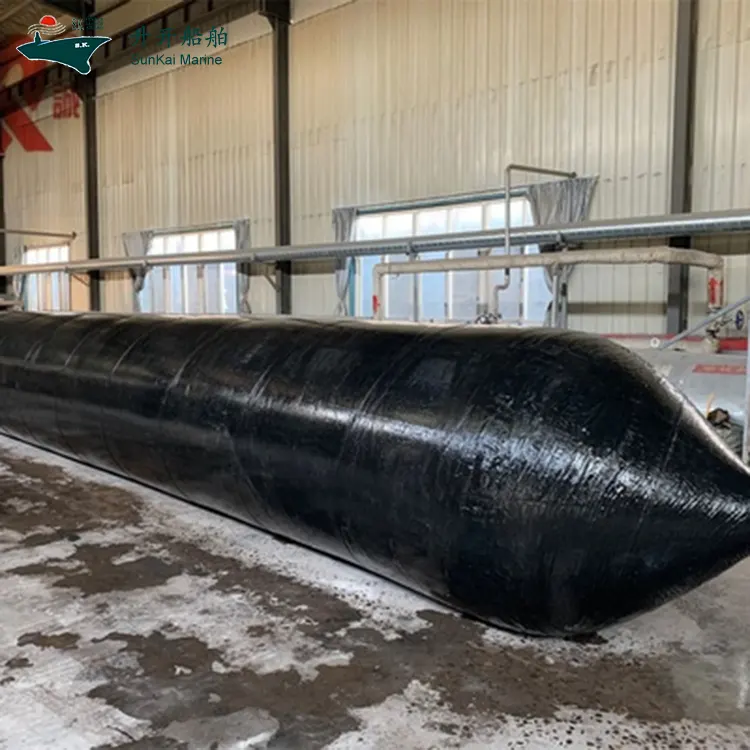
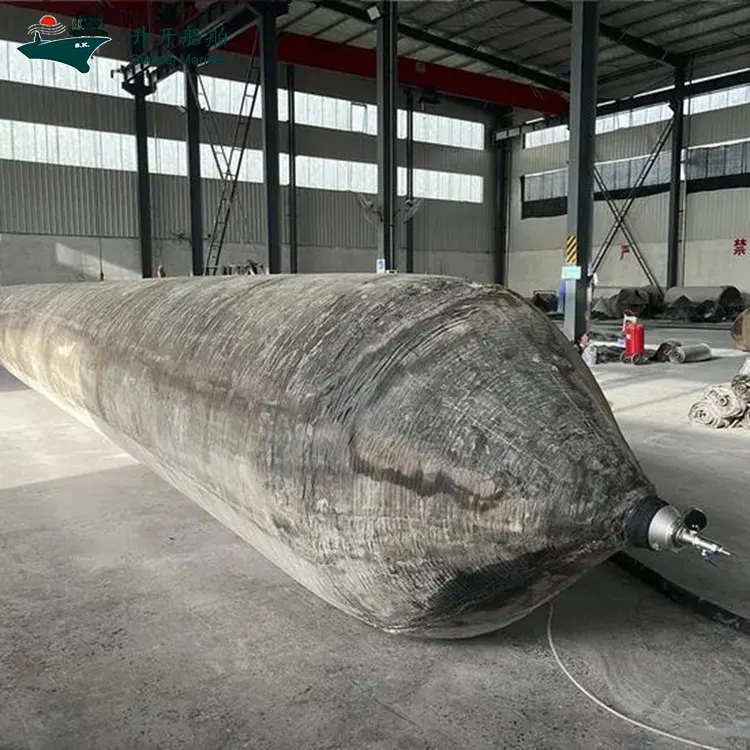
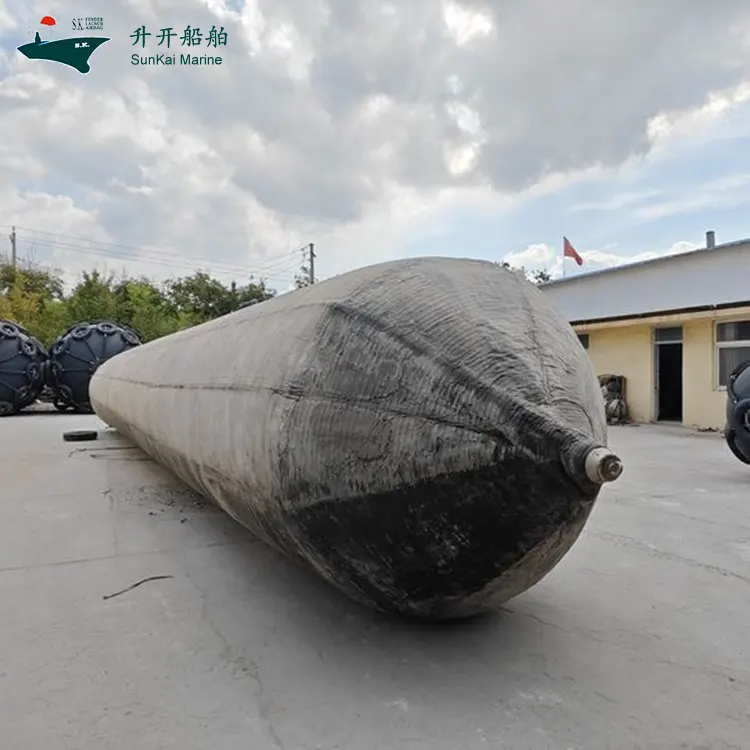
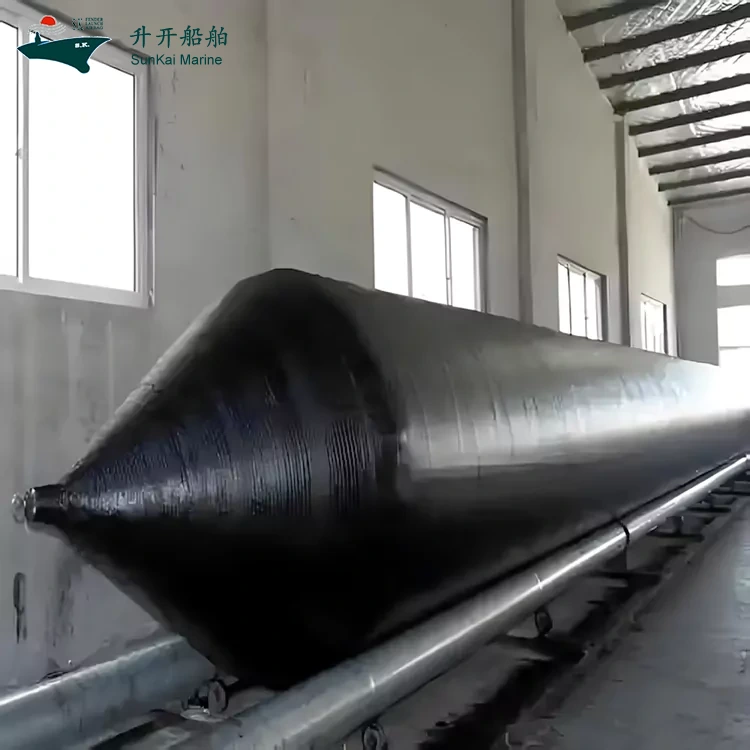
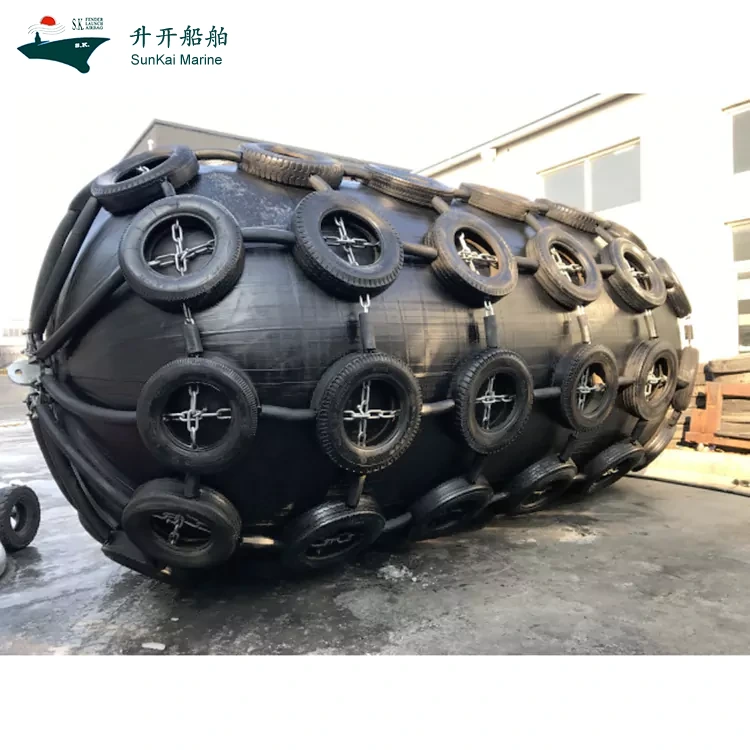
Qingdao SunKai Marine Supplies Co., Ltd. professionally supplies Ship Docking Inflatable Airbags featuring multi-layer high-strength synthetic tire cord reinforced rubber structure with integral winding molding, strong load capacity and high safety factor, burst pressure no less than 3 times rated pressure. Manufactured per ISO 14409 and CB/T 3795 standards, suitable for port vessel docking, inter-berth relocation and temporary berthing, reducing terminal infrastructure investment. Welcome shipyards and port authorities to contact us for purchase inquiries, with customized specifications available.
Qingdao SunKai Marine Supplies Co., Ltd. is a leading manufacturer of Ship Docking Inflatable Airbag, built with multi-layer high-strength synthetic tire cord reinforcement and natural rubber compounds through integral winding molding and high-temperature vulcanization, in strict compliance with ISO 14409:2011 and CB/T 3795 standards. These airbags are specifically engineered for ship docking, relocation and temporary berthing operations at ports and shipyards, providing stable cylindrical support with minimal infrastructure requirements. Welcome new and existing customers to contact us for ordering inquiries.
What Is Ship Docking Inflatable Airbag?
Ship Docking Inflatable Airbag is a cylindrical flexible load-bearing device made of high-strength rubber and synthetic tire cord, using compressed air as the working medium. When inflated, it forms a rigid cylinder that creates low-friction rolling support between the vessel hull and ground, enabling vessel launching, haul-out, relocation, docking and berthing operations.
Compared with traditional vessel launching methods such as gravity slipways, floating dry docks and crane lifting, this product requires minimal infrastructure, offers operational flexibility, ensures safety and controllability, and is reusable. It has become the preferred equipment for small and medium-sized shipyards and vessel repair enterprises worldwide.
Key Advantages
High Load Capacity: Multi-layer high-strength synthetic tire cord reinforcement with single cord breaking strength >= 205N/strand, capable of supporting vessels weighing thousands of tons.
High Safety Factor: Burst pressure no less than 3 times the rated working pressure, with premium models reaching 4.5 times, ensuring safety under extreme operating conditions.
Low Rolling Friction: Inflated cylindrical shape provides a rolling friction coefficient typically below 0.05, requiring only minimal traction force to move heavy vessels.
Excellent Weather Resistance: Outer rubber compound resists aging, UV radiation and seawater corrosion, operating normally in temperatures from -25C to +60C.
Reusable & Economic: Service life of 5-8 years or 200-300 launching cycles under proper use and maintenance, delivering outstanding economic value.
Customizable: Diameter range 0.6m-4.0m, length range 3m-35m, cord layers 3-20, customizable to specific vessel parameters and operating conditions.
Specifications
Main specifications of this product series. Other sizes can be customized upon request.
Model
Diameter(m)
Init.Press(kPa)
Rated Press(kPa)
Capacity(kN/m)
Min.Burst(kPa)
YB-3
0.8
25
130
114
390
YB-4
1.0
18
100
110
300
YB-5
1.2
15
85
112
260
YB-6
1.5
13
70
115
210
YB-7
1.8
16
90
178
270
YB-8
2.0
14
80
185
240
YB-9
2.5
10
60
200
180
Applications
Vessel Launching: New vessels launched from slipways, proven for vessels up to 75,000 DWT.
Vessel Haul-out & Repair: Ships pulled ashore for maintenance without expensive dry dock infrastructure.
Dry Dock Operations: Assisting vessel entry and exit from dry docks, reducing reliance on traditional dock gates.
Marine Salvage & Rescue: Buoyancy aid for stranded or sunken vessel recovery and emergency lifting.
Heavy Structure Moving: Land transport of caissons, large concrete structures and heavy industrial components.
Temporary Berthing: Temporary berthing and mooring support in waters without fixed dock facilities.
Production Process
Step 1: Raw Material Inspection - Incoming inspection of natural rubber, synthetic rubber, tire cord, vulcanizing agents and other materials to ensure compliance with ISO 14409 standards.
Step 2: Rubber Compounding - Mixing rubber with various compounding ingredients in internal mixers, controlling temperature and time to ensure uniform and stable compound properties.
Step 3: Calendering - Laminating mixed rubber with synthetic tire cord through calendering machines to produce rubber-coated cord fabric as the reinforcement skeleton.
Step 4: Integral Winding Molding - Winding cord fabric and rubber sheets onto the mandrel at designed angles and layer counts using specialized winding equipment, ensuring uniform cord stress distribution.
Step 5: End Fitting Assembly - Installing metal valves and valve components at both ends, including ball valves, pressure gauge ports and safety valves, ensuring airtightness and operational convenience.
Step 6: High-Temperature Vulcanization - Curing the molded airbag in autoclaves at approximately 150C under specified pressure and time, enabling cross-linking of rubber molecules.
Step 7: Finished Product Inspection - Post-curing inspection including appearance check, dimensional measurement, airtightness test (1-hour pressure drop <=5%), compression test and sampling burst test.
Step 8: Packaging & Storage - Cleaning and drying qualified products, inflating with low-pressure air (~0.02MPa), applying talcum powder, using waterproof packaging, and storing in warehouse.
Frequently Asked Questions (FAQ)
Q1: How does a marine airbag work?
A1: Marine airbags inflate to form cylindrical elastic bodies, using the cylinder rolling principle to create low-friction rolling support between the ship hull and ground. Inflation pressure determines load capacity; diameter and length determine load-bearing area.
Q2: What equipment is needed for airbag operations?
A2: Main equipment includes: air compressor, pressure gauges, inflation hoses and connectors, winches for traction, wire ropes and shackles, and wooden blocks for temporary support.
Q3: How many times can one airbag be used?
A3: Under normal use and proper maintenance, one marine airbag can be reused 200-300 times, with a service life of approximately 5-8 years.
Q4: Can airbags be used in seawater long-term?
A4: Yes. The outer rubber compound is formulated for seawater corrosion resistance. Rinse with fresh water after each use and dry before storage to extend service life.
Send your inquiry to SunKai now! Get a quick quote for our quality Marine Airbag, Marine Fender, Marine Buoys. Our China team offers professional support.
We use cookies to offer you a better browsing experience, analyze site traffic and personalize content. By using this site, you agree to our use of cookies. Privacy Policy