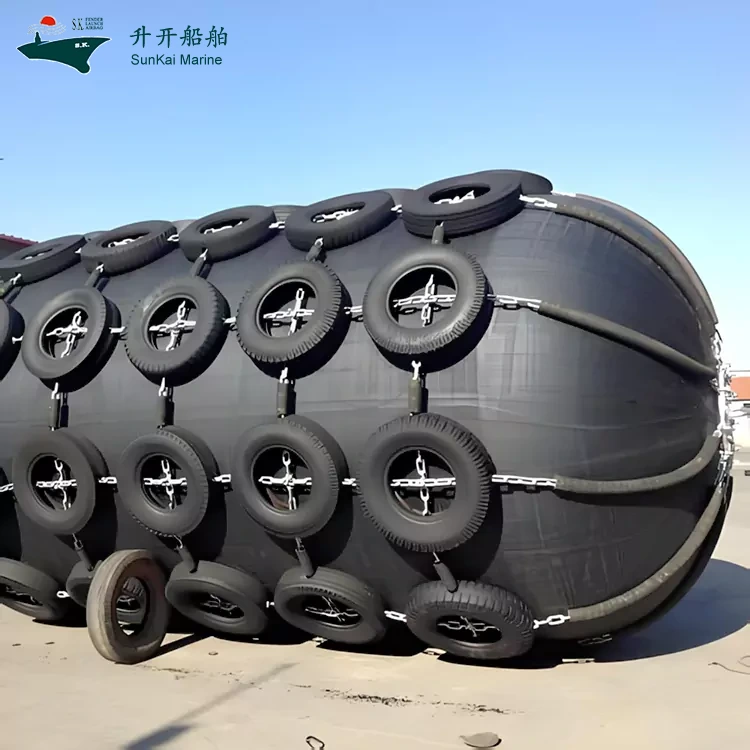
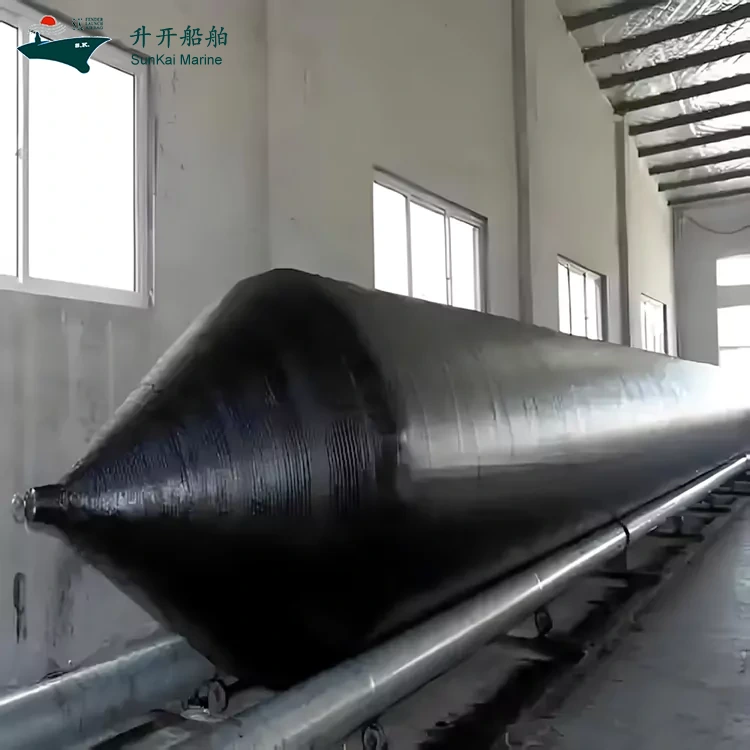
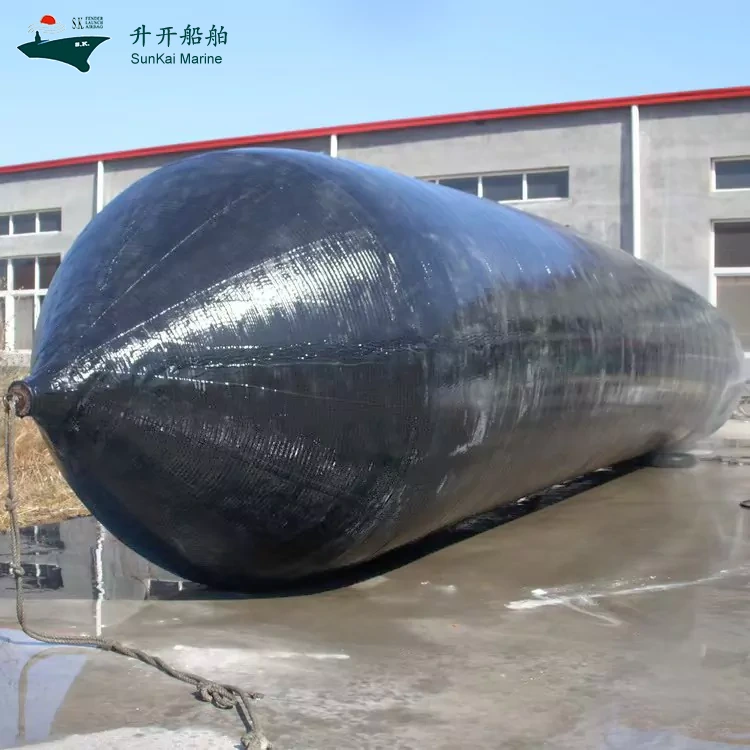
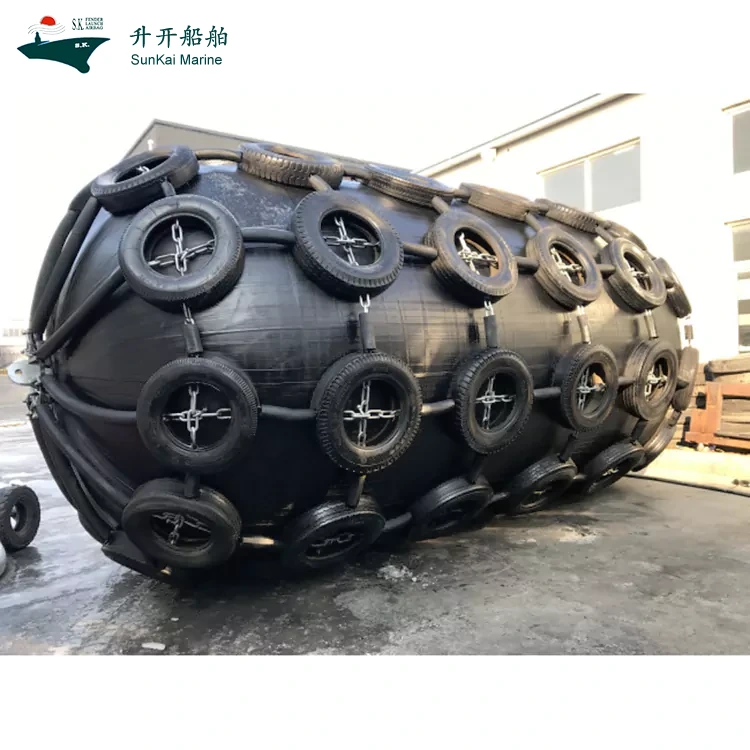
SunKai's Low Pressure Pneumatic Fender is a professional anti-collision equipment designed specifically for ship berthing and mooring scenarios. It uses a low-pressure inflatable structure, which can effectively absorb and disperse the impact force between ships and docks or between ships, avoiding damage to the hull and port facilities.
Low Pressure Pneumatic Fenders are commonly used anti-collision protection equipment in port, wharf and ship operations. The core structure is made of high-strength synthetic fiber fabrics (such as nylon and polyester) as the inner tube skeleton, and the outer layer is covered with wear-resistant and anti-aging rubber or PVC materials. A flexible buffer is formed by filling low pressure air (usually working pressure 0.02-0.08MPa).
What are the advantages of low-pressure inflatable fenders?
1. Buffer protection is more reliable: relying on the compressibility of low-pressure air, it can gradually absorb the impact force through its own flexible deformation during collision, avoiding scratches or dents on the ship's shell and dock structure due to hard contact, especially suitable for larger tonnage ships berthing. The protective effect is softer and less likely to damage the protected object than rigid fenders.
Strong adaptability to the environment: The outer layer of rubber or PVC material is resistant to seawater corrosion and UV aging. Long term immersion in seawater or exposure to sunlight in outdoor environments is also less likely to cause cracking and aging problems; Even in waters with alternating high and low temperatures, the performance can remain stable without frequent replacement.
2. More worry free use and maintenance: The overall weight is light, and installation does not rely on large lifting equipment. It can be completed manually with simple tools; In daily life, it is only necessary to regularly check the air pressure through the built-in pressure gauge, and supplement it with an inflation valve when it is insufficient. There is no complicated maintenance process, and the maintenance cost is low.
3. High flexibility and adaptability: Flexibility and Adaptability: Low-Pressure Pneumatic Fenders can be customized in various diameters and lengths based on berth width and vessel tonnage requirements, making them suitable for use at both small yacht berths and large container ship terminals. They do not require fixed locations and are easily disassembled and transported for temporary berth adjustments.
4. More outstanding cost-effectiveness: Compared with traditional steel or concrete fenders, the initial procurement cost is lower, coupled with the characteristics of wear resistance and simple maintenance. After long-term use, the overall investment is less than that of rigid fenders, especially suitable for small and medium-sized ports or scenarios that require frequent adjustment of protective positions.
Product Parameters
Pneumatie 80 Kpa fender size and performance requirements
Pneumatic 50 Kpa fender size and performance requirements
Nominal size diameter x length(mm)
Initial internal pressure (kpa)
Guaranteed energy absorption(GEA)
Reaction force at GEA deflection (R)
Hll presure(ntenal pressure)at GEA deflection(p)
60±5%KJ
Tolerance+10% (KN)
Reference value (kpa)
500*1000
50Kpa
6
64
132
600*1000
50Kpa
8
74
126
700*1500
50Kpa
17
137
135
1000*1500
50Kpa
32
182
122
1000*2000
50Kpa
45
257
132
1200*2000
50Kpa
63
297
126
1350*2500
50Kpa
102
427
130
1500*3000
50Kpa
153
579
132
1700*3000
50Kpa
191
639
128
2000*3500
50Kpa
308
875
128
2500*4000
50Kpa
663
1381
137
2500*5500
50Kpa
943
2019
148
3300*4500
50Kpa
1175
1884
130
3300*6500
50Kpa
1814
3015
146
3300*10600
50Kpa
3067
5257
158
4500*9000
50Kpa
4752
5747
146
4500*12000
50Kpa
6473
7984
154
Low pressure inflatable fender manufacturing process
1.Material pretreatment: Firstly, according to the design requirements, the high-strength synthetic fiber cloth (usually nylon or polyester) must be cut, which is the skeleton layer of the fender inner tube. When cutting, it is important to ensure that the fabric surface is flat and the dimensions are accurate, otherwise there may be deviations in the subsequent splicing; At the same time, prepare the outer protective layer material by processing the rubber or PVC roll through a rolling machine to achieve uniform thickness and enhance wear resistance.
2.Inner tube forming: Fold the cut multi-layer fiber cloth together and splice it into a sealed tubular inner tube using high-frequency heat sealing or adhesive. The interface needs to be repeatedly compacted to ensure no air leakage - this step is particularly crucial, as there may be air leakage later if there are gaps; Next, install the inflation valve and pressure sensor base at the designated location, and also ensure proper sealing to prevent gas leakage.
3.Outer wrapping: Use a winding machine to tightly wrap the processed rubber or PVC outer material around the inner tube. When wrapping, control the tension to avoid wrinkles or bubbles; Then, the outer layer and inner tube are firmly bonded using high-temperature vulcanization technology. The vulcanization temperature is usually controlled at 150-180 ℃, and the time is adjusted according to the specifications of the fender to ensure that the two layers of materials are firmly bonded and improve the overall impact resistance.
4.Detection and repair: First, conduct an air tightness test on the fender, fill it with low-pressure gas (pressure approximately 0.05MPa), and let it stand for 24 hours to observe the pressure change. If the pressure drops beyond the standard, we need to find the leak point for repair; Check the appearance again, clean off any excess glue or burrs on the surface, and ensure that the fender surface is smooth and undamaged; Finally, according to the customer's requirements, install the lifting ring, pressure gauge and other accessories to complete the overall assembly.
Characteristics of low-pressure inflatable fenders
1. High impact capability
2. High capacity anti collision shrinkage and twisting
3. New design of anti explosion structure
4. Structural layout optimization
5. Durability, aging resistance, and wear resistance characteristics
Send your inquiry to SunKai now! Get a quick quote for our quality Marine Airbag, Marine Fender, Marine Buoys. Our China team offers professional support.
We use cookies to offer you a better browsing experience, analyze site traffic and personalize content. By using this site, you agree to our use of cookies. Privacy Policy